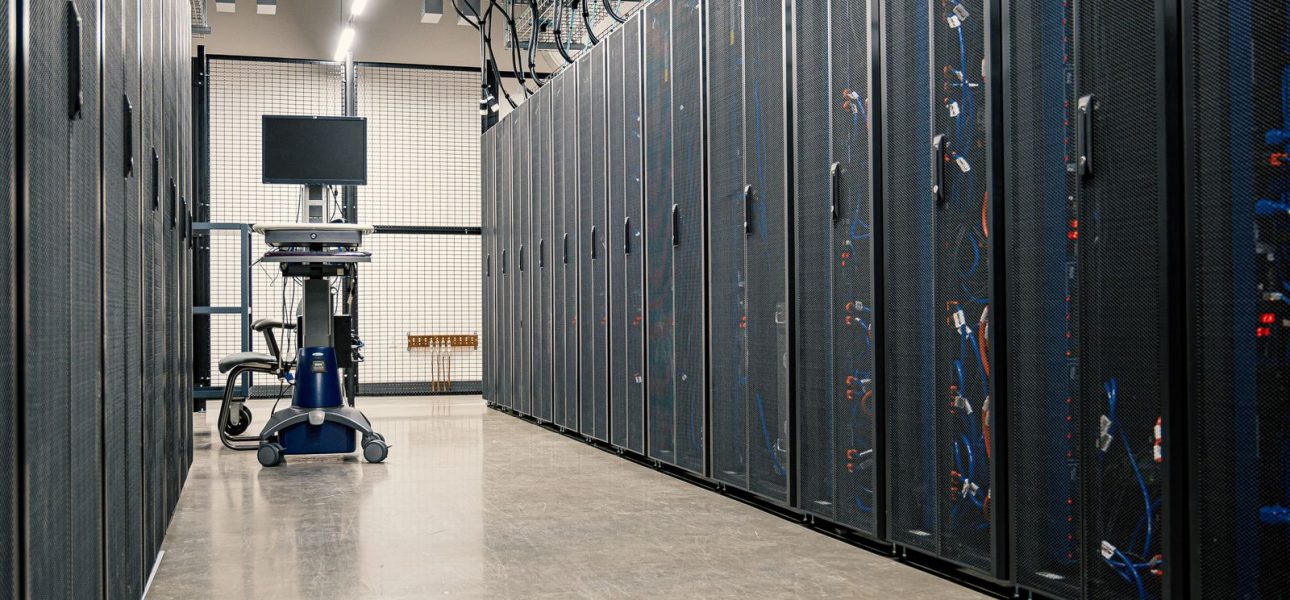
Data center conversion financing funds the repositioning of industrial, warehouse, or obsolete commercial buildings into data centers and powered shells. It is one of the most capital-intensive and specialized plays in commercial real estate — underwritten less on existing rent and more on power availability, the conversion budget, and a credible end user or take-out. That complexity is exactly why few lenders compete here, and why the right capital match is decisive.
⚡ Quick Answer: Converting industrial space to a data center hinges on power (available megawatts and substation capacity), fiber/connectivity, cooling, and a path to a tenant or sale. Financing usually comes as bridge or construction debt from private-credit funds, family offices, and specialty lenders, then refinances on stabilization or sale. Bancaverse sources that capital across the spectrum. Get matched →
Why Convert Industrial to a Data Center?
Surging demand from cloud and AI workloads has outrun the supply of power-ready space. Well-located industrial buildings — with heavy power service, high clear heights, and proximity to fiber and substations — can be repositioned into data centers or “powered shells” at a fraction of ground-up timelines. The value creation is enormous, but so is the execution risk, which is why this sits at the specialized end of commercial real estate financing.
How Do Lenders Underwrite Data Center Conversion Financing?
Underwriting centers on the inputs that make a conversion viable:
- Power. Available megawatts, utility commitments, and substation/transformer capacity — the single biggest gating item.
- Connectivity. Proximity to fiber routes and carrier presence; latency to demand centers.
- The conversion budget. Cooling, electrical build-out, redundancy (N+1), and security — held and drawn like construction.
- The exit. A signed or prospective hyperscale/colocation tenant, a powered-shell sale, or a permanent refinance.
- Sponsor. Experience executing complex, power-intensive repositioning.
What Capital Funds These Deals?
| Stage | Typical capital |
|---|---|
| Acquisition / pre-development | Private-credit funds, family offices, bridge debt |
| Conversion / build-out | Construction & specialty lenders (draw-based) |
| Stabilization / lease-up | Bridge-to-permanent |
| Take-out | Institutional / sale to operator |
Which Markets Are Hot for Data Center Conversions?
Power and land availability drive site selection. Within Bancaverse’s footprint, Texas (Dallas–Fort Worth and the broader grid) leads, with strong activity in Georgia (Atlanta), Arizona (Phoenix), and emerging corridors across the Carolinas, Florida, Utah, and Colorado — markets with industrial inventory and utility capacity.
How to Finance a Data Center Conversion Through Bancaverse
Bring the site’s power profile (available MW, utility correspondence), the conversion budget, any tenant interest, and the exit plan. Bancaverse represents the borrower and routes the request to the private-credit funds, family offices, and specialty lenders that fund niche private money loans like this — with no upfront fee to review.
Repositioning industrial into a data center? Get matched →
Frequently Asked Questions
Q: What makes an industrial building a good data center candidate?
A: Available power (megawatts and substation capacity), proximity to fiber, adequate clear height and floor loading, and a path to a tenant or powered-shell sale.
Q: How is conversion financing structured?
A: Usually bridge or construction debt drawn against the conversion budget, then a refinance or sale on stabilization. Equity often comes from family offices or private-credit partners.
Q: Why is power the gating item?
A: Data centers are power-first assets. Without committed megawatts and substation capacity, the conversion can’t pencil — lenders underwrite power before anything else.
Q: Do I need a signed tenant to finance?
A: Not always. A powered-shell strategy or strong prospective demand can support financing, though a signed hyperscale or colocation tenant improves terms.
Q: Which states does Bancaverse cover?
A: Texas, Florida, Georgia, Arizona, North Carolina, South Carolina, Utah, and Colorado, subject to lender availability.