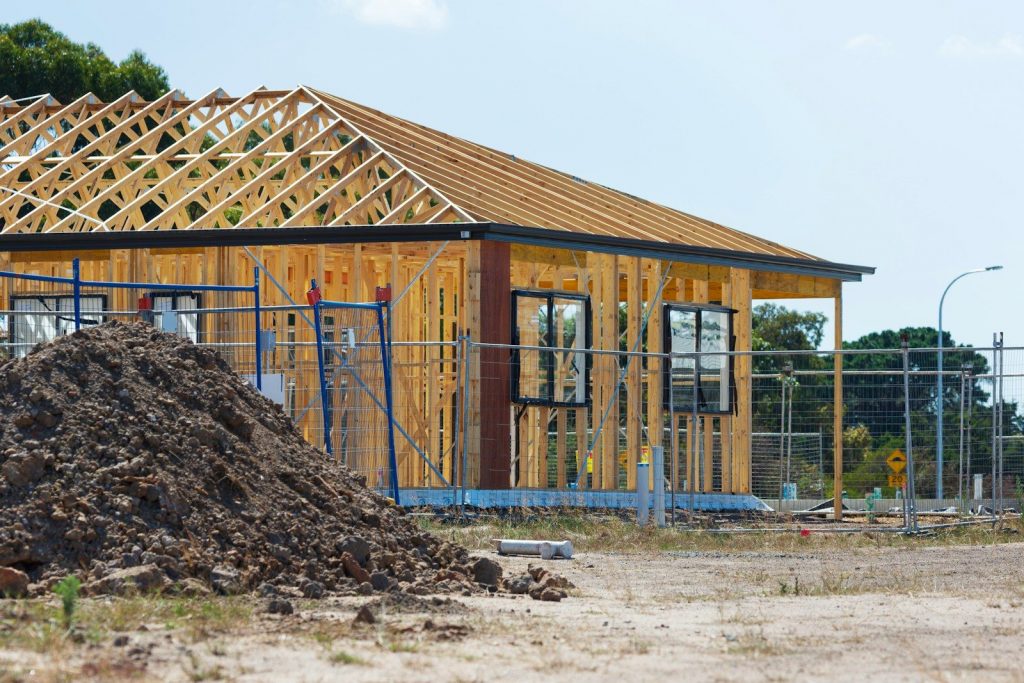
Loan-to-Cost vs Loan-to-Value: How Construction and Value-Add Lenders Size a Deal
Loan-to-cost vs loan-to-value: which ratio sizes your construction or value-add loan, typical LTC and LTARV ranges, and what kills deals. Get matched today.

Loan-to-cost vs loan-to-value: which ratio sizes your construction or value-add loan, typical LTC and LTARV ranges, and what kills deals. Get matched today.

Why community commercial reprices around the megasites Texas has roughly 6.5 GW of data-center capacity under construction and at least 248 projects in the pipeline, with JLL projecting the state becomes the world’s largest data-center market by 2030. But the durable real-estate opportunity for investors isn’t the campus — it’s everything that has to exist […]

Why workforce housing is the cleanest play on the boom You don’t have to build a chip fab to profit from one — you have to house the people who run it. Samsung’s Taylor fab alone expects about 1,500 permanent employees by the end of 2026, with roughly 3,000 workers on-site during ramp. SpaceX’s Bastrop […]

The biggest constraint on artificial intelligence isn’t chips — it’s electricity, and it is rewriting the map for AI data center real estate. US data center power demand is projected to roughly double from about 31 gigawatts in 2025 to 66 GW by 2027, and to keep climbing for a decade. With the grid unable […]

Empty downtowns and a housing shortage are colliding into one of the decade’s biggest redevelopment trends. Developers had about 90,300 apartment units in the office-conversion pipeline in early 2026 — up 28% year over year and nearly four times the 2022 total. With cities layering on tax incentives, office to residential conversion financing has become […]

Financing a value-add apartment deal almost always uses two loans in sequence: a short-term bridge loan to acquire and renovate the property, then a long-term refinance once the higher rents lift net operating income (NOI). Understanding that two-step path — and underwriting it conservatively — is what separates a profitable reposition from a stalled one. […]

Value add commercial real estate in the Texas Triangle is not a single strategy. It is a collection of distinct plays differentiated by asset class, geography, capital structure, and execution timeline, each with its own return profile, risk factors, and financing requirements.

Retail real estate was supposed to be the casualty of the ecommerce decade. The narrative was relentless and seemingly inevitable: Amazon was killing retail, brick and mortar was dying, and the malls were next. Texas did not get the memo.

The Texas multifamily market spent 2024 and 2025 digesting an extraordinary supply wave. Developers who approved construction starts during the low-rate environment of 2020 through 2022 delivered a volume of new units that temporarily exceeded absorption capacity in several major metros.

Scaling a residential rental portfolio from 10 units to 50 units is not a linear extension of the strategy that got you to 10 units. It requires a different financing toolkit, a different underwriting fluency, and a different operational mindset. The investors who make this leap successfully are almost universally the ones who understood multifamily bridge financing in enough depth to use it as a deliberate scaling mechanism rather than a financing option of last resort when other capital sources were unavailable.