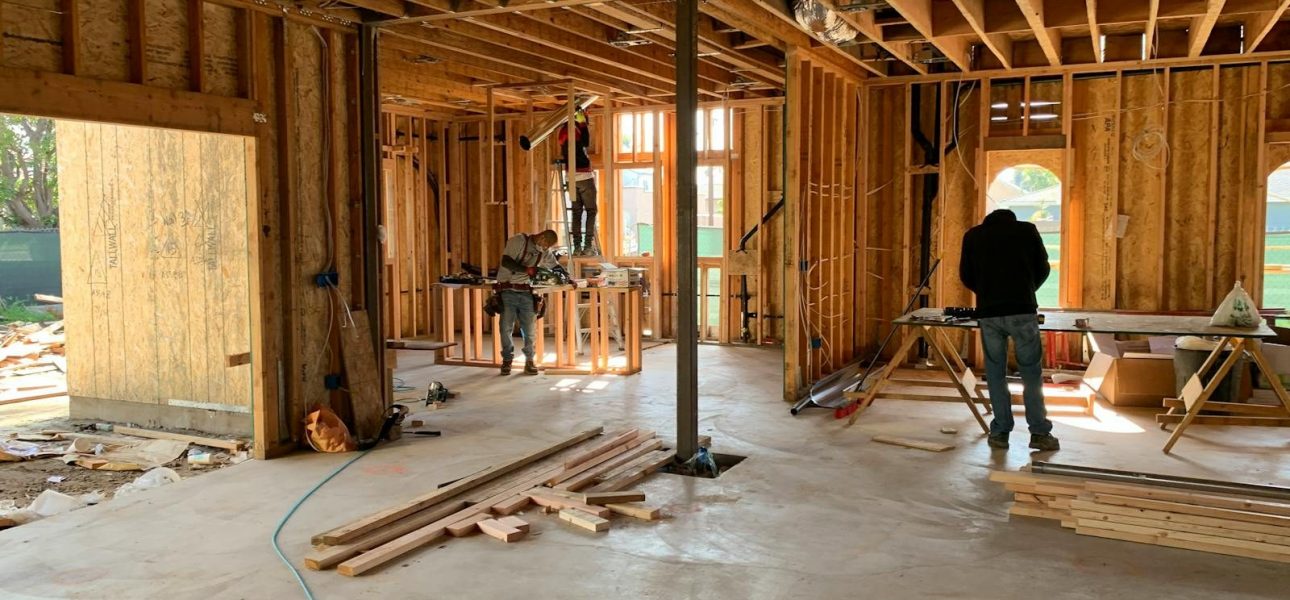
Construction lending is the most scrutinized loan product in private real estate finance, and for reasons that make complete sense once you understand the lender’s perspective. Every other real estate loan type is underwritten against an existing asset: a property that can be inspected, appraised, photographed, and analyzed based on what it is right now. Construction lending is underwriting against a plan. The collateral does not yet exist. The lender is deploying capital against drawings, budgets, permits, and the credibility of the team presenting them. That is an inherently more complex and higher-stakes underwriting exercise, and it requires a correspondingly more complete and professional submission from the borrower.
This guide covers every element of a complete construction loan package in enough detail to be actionable for serious developers. Whether this is your first ground-up project or your tenth, understanding what lenders are actually evaluating and why will help you structure your submission to move through underwriting faster, produce more competitive terms, and avoid the most common mistakes that delay or kill construction loan approvals.
Stamped Plans and Permits: The Foundation of Every Construction Loan
Construction lenders universally require stamped architectural plans, meaning drawings that have been reviewed and certified by a licensed architect or engineer bearing their professional stamp. Conceptual renderings, preliminary sketches, or 3D visualizations are not substitutes for stamped working drawings. They might supplement a submission as illustrative material, but the core documentation requirement is structural drawings prepared by a licensed professional that have been reviewed for code compliance and are sufficient to govern the actual construction.
The permit status of your project significantly affects your loan timeline and structure. A project with approved permits in hand is a fundamentally different underwriting situation than a project where the permit application has been submitted but not yet approved. Lenders prefer fully permitted projects because the permit approval confirms that the municipality has reviewed the plans and found them compliant, which reduces a major category of project risk. For projects where permits are in process, lenders need to understand the permitting timeline and will typically structure the loan so that initial draws are available immediately but construction cannot begin until permits are confirmed.
Different municipalities have dramatically different permit timelines. A project in a Texas municipality with an efficient planning department might have permits approved in three to six weeks. A project in a major California coastal market might be waiting eight months to two years for permit approval depending on the project type and any environmental or community review requirements. Building these timelines into your project plan and communicating them transparently to lenders is essential for aligning expectations about project start dates and draw schedules.
Permit sets include multiple document types: site plans showing the property layout and setbacks, architectural drawings showing floor plans, elevations, and sections, structural drawings covering foundation, framing, and load calculations, and mechanical, electrical, and plumbing drawings covering all utility systems. Lenders may review different components of this set with different levels of detail, but having the complete stamped set available is the standard that serious construction lenders expect.
The Construction Budget: Where Most Deals Fail
The construction budget is the document that receives more scrutiny from experienced construction lenders than any other element of the submission, and it is the document where most borrowers make the mistakes that slow or kill their deals. A construction budget is not a rough estimate of total renovation cost. It is a detailed, line-item financial plan for executing a specific scope of work at specific quality levels in a specific market at specific material and labor costs.
The standard line item structure for a ground-up construction budget covers the following categories: site work including clearing, grading, excavation, and utilities, foundation systems including materials and labor, framing and structural wood or steel, exterior envelope including roofing, exterior cladding, windows, and doors, rough mechanical including HVAC ductwork, plumbing rough-in, and electrical rough-in, insulation and air barrier systems, interior rough including interior framing, fire blocking, and fire sprinklers if required, finish mechanical including HVAC equipment, plumbing fixtures, and electrical fixtures and panels, drywall, taping, and texture, interior finishes including flooring, cabinetry, countertops, tile, and hardware, exterior finishes including landscaping, concrete flat work, and site improvements, permits and inspection fees, design and engineering fees beyond those already paid, insurance and bonds, project management fees if using a general contractor on a fee basis, and contingency.
The contingency line should run 8 to 12 percent of total hard costs for most residential and small multifamily ground-up projects. This is not optional padding or a negotiating point. It is the acknowledgment that even the best-planned construction projects encounter conditions that were not anticipated in the original estimate. Material price changes, hidden soil conditions, design revisions, code interpretation differences, and subcontractor scheduling impacts all create cost variability that the contingency is designed to absorb. Lenders who see construction budgets without adequate contingency are looking at borrowers who have not done this enough times to know what they do not know, and they underwrite accordingly.
Contractor bids are the most powerful evidence that your budget is credible. A general contractor’s fixed-price bid or a detailed estimate from a GC who has reviewed the plans and is prepared to provide a commitment letter transforms your budget from a spreadsheet exercise into a commercial document. Lenders who see real bids from qualified contractors move faster and with more confidence than lenders who are evaluating budgets built entirely by the developer without subcontractor input.
Pro Forma for Multifamily Projects
For multifamily ground-up projects, whether market-rate apartments, condominiums, or small commercial mixed-use, lenders underwrite both the cost side and the income side of the project. The pro forma is the document that presents the income projections, and it needs to be supported with the same quality of market evidence that you would bring to any income property underwriting.
A multifamily pro forma includes the projected unit mix by type and size, the projected market rent for each unit type supported by comparable lease data, a stabilized vacancy assumption based on market vacancy rates for the asset type and market, the resulting effective gross income, operating expense estimates including insurance, taxes, management, maintenance, and any common area utilities, and the resulting net operating income. From the NOI, the pro forma derives the projected market value at stabilization using a capitalization rate derived from comparable property sales in the same market and asset class.
The rental comparables used to support your rent projections need to meet the same quality standards as sale comparables in a flip or bridge deal: recent, nearby, and genuinely comparable. If you are projecting rents for a new construction mid-rise apartment in a specific Houston submarket, your comps need to be new or recently renovated apartments in the same submarket with similar unit sizes and finishes. Comps from a different submarket or a significantly different product type will be challenged during lender review and will slow underwriting while the lender develops their own independent view of market rents.
For condominium or for-sale projects, the pro forma shifts to a sell-out analysis rather than an income analysis. The sell-out pro forma presents the projected sale price per unit or per square foot, the total projected sale proceeds across all units, a selldown timeline with assumptions about absorption rate, and the developer profit net of all costs and financing charges. Comparable new construction sales are the essential supporting evidence, and they need to be recent enough to reflect current market conditions rather than peak-cycle pricing from 2021 or 2022.
Exit Strategy: The Question Every Construction Lender Asks
Construction loans are always bridge products, meaning they are short-term capital that funds a construction and stabilization period before transitioning to permanent financing or a sale exit. Every construction lender, regardless of their stated underwriting criteria, wants to understand clearly how their loan will be repaid. The exit strategy is not a formality. It is a core underwriting input that affects both approval and loan structure.
For for-sale projects, the exit is the sale of the completed units. The lender needs to see that the projected sale prices are supported by current comparable transactions, that the absorption timeline is realistic for the market, and that the project economics produce a healthy developer profit margin above all costs including the construction loan. A project where the developer breaks even at stabilized value but must pay a construction loan at 11 percent for 18 months is a project in distress if the sale market softens. Lenders underwrite against stress scenarios, not just base case projections.
For rental projects with a permanent financing exit, the lender needs to see that the stabilized NOI will support the permanent loan at the rate and LTV the borrower is projecting. If your plan is to refinance into DSCR or agency permanent financing at stabilization, show the math: projected NOI, divided by a projected DSCR requirement of 1.25, produces a maximum debt service that supports a permanent loan of a specific size at current rates. If that permanent loan size is sufficient to repay your construction loan and return your initial equity, the exit is viable. If it falls short, the lender needs to understand where the gap is filled.
The Sponsor Profile: Why Experience Matters More in Construction
Experience matters more in construction lending than in any other private loan category, and the gap in underwriting treatment between experienced and inexperienced developers is significant. A borrower who has completed five ground-up projects similar to the subject, with documentation, will access better rates, higher LTC, faster approval timelines, and more flexible draw structures than a borrower who has completed two residential flips and is presenting their first ground-up deal. This is not arbitrary gatekeeping. It is a rational response to actual risk.
Ground-up construction is operationally complex in ways that fix-and-flip is not. Managing a general contractor, coordinating multiple subcontractor trades, navigating municipal inspections and change orders, maintaining a draw schedule that keeps the project funded while managing cash flow, making design decisions under time pressure, and maintaining quality control across a project that takes 12 to 24 months to complete requires a skill set that is developed through experience, not described in a business plan.
First-time ground-up developers should be honest about their experience level and compensate with strong supporting elements: a highly experienced general contractor who has completed multiple similar projects and will provide a commitment letter, a project manager or development partner with a track record, detailed plans and permits that demonstrate professional pre-construction work, and a project budget reviewed and validated by the GC rather than prepared independently. These elements do not replace experience, but they demonstrate a level of professional preparation that experienced construction lenders can evaluate and take confidence from.
The development relationship with Bancaverse, including the agent’s review and deal packaging, adds another layer of credibility for lenders who know that submissions going through this process have been reviewed for completeness and accuracy before they arrive. That review step is not a guarantee of approval, but it is a signal that the deal has been evaluated by someone with deal experience before it reached the lender’s desk, which matters to lenders who have seen enough poorly prepared submissions to know how unusual a clean, complete, professionally packaged construction deal is.
Common Mistakes That Kill Construction Loan Applications
The failure modes in construction lending are predictable and preventable. Missing or incomplete plans are the most common issue at initial submission. A budget without line-item detail is the second most common. An exit strategy stated without supporting evidence is third. Beyond these documentation gaps, the most consequential mistakes are misrepresenting borrower experience, presenting budgets that underestimate actual construction costs in the subject market, and projecting exit values that are not grounded in current comparable transaction data.
Each of these mistakes has the same effect: it slows the underwriting process while the lender works to develop an independent view of the information you should have provided, or it raises questions about the credibility of the entire submission that are difficult to overcome once trust has been eroded. The correct strategy is to over-prepare and under-promise rather than optimize your submission for the most favorable presentation. Lenders who see conservative, credible submissions from borrowers who have clearly done their homework are the lenders who move fastest and offer the most competitive terms. That is not coincidental. It is a direct reflection of how professional preparation reduces the perceived risk that drives loan pricing.
Get Multiple Offers on Your Deal
Ground Up Construction Loan Requirements: Key Takeaways
When it comes to ground up construction loan requirements, a few fundamentals drive the outcome. However, markets shift, so timing, leverage, and structure all matter. As a result, lining up the right financing early is often the difference between a deal that closes and one that stalls.
Bancaverse helps real estate investors with ground up construction loan requirements — we structure the scenario and match it to the private lenders most likely to fund it. Explore our fix-and-flip loans and the full loan products overview, or browse our FAQs. Ready to move? Get matched with a lender →