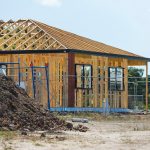
The short version: Texas now has more data-center and chip-plant construction underway than any market in North America, and that boom is bending the housing market in two directions at once — soaring demand for new homes near the megasites, and a labor-and-land squeeze that is making those homes slower and costlier to build. For builders and developers, private ground-up construction loans (typically 9.5%-13% from private lenders, or roughly 7%-9% on bank-style facilities, at 65%-85% of total cost) are the tool keeping projects moving when conventional timelines won’t. Bancaverse is a broker — we structure your project and match it to the construction lenders most likely to fund and close it.
Our angle: Bancaverse doesn’t finance data centers or chip fabs — and we don’t lend our own money on anything. We’re a broker: we represent borrowers, builders and sponsors who need private capital, and arrange the financing for the housing and community real estate the boom requires — the homes, apartments, retail and mixed-use that house and serve the incoming workforce. We match those clients to the private lenders most likely to fund them. The opportunity is the wave of private capital and high-wage jobs flowing into Texas.
Why the Texas build-out is a housing story
Texas has roughly 6.5 GW of data-center capacity under construction — more than any other single market on the continent — and JLL projects the state will overtake Northern Virginia as the world’s largest data-center market by 2030. At least 248 data-center projects are in the pipeline, and the state’s data-center load is expected to reach about 30% of total U.S. demand by 2028.
Layer on the chip and advanced-manufacturing megaprojects: the OpenAI/Oracle/SoftBank “Stargate” campus in Abilene ($500B program, an 1,100-acre flagship targeting 2.1 GW), SpaceX’s Terafab in Grimes County (a reported $55B first phase), Samsung’s $17B fab in Taylor (about 1,500 permanent staff by the end of 2026 and ~3,000 workers on-site during ramp), and Google’s $40B commitment. Each site pulls in thousands of permanent and contract workers who need somewhere to live.
The catch: the boom is competing with homebuilders for labor and land
Data-center construction is electrical-work-heavy — 45% to 70% of a data-center build budget can go to electrical scope — and Texas has only about 71,000 electricians to go around. AI developers can outbid homebuilders for that talent, and the result is measurable: some Texas contractors report homes now take up to two months longer to finish. At the same time, “powered land” near substations is being bid up, complicating residential land underwriting. For a builder, that means schedule risk and carry-cost risk are both rising — exactly the conditions where a flexible construction loan beats a rigid bank line.
How private ground-up construction loans bridge the gap
Private construction lenders underwrite the project and the sponsor, not just a credit box. In 2026 that typically looks like:
- Rates: about 9.5%-13% from private lenders; 7%-9% on bank-style facilities for strong, experienced sponsors.
- Leverage: 65%-85% of total project cost (land plus hard and soft costs).
- Term: 12-36 months, interest drawn against a milestone-based draw schedule.
- Speed: many private lenders move in 2-4 weeks, which matters when you’re racing labor availability.
Where this fits the boom: infill single-family and townhomes in Bastrop, Taylor, Hutto, Abilene and the Grimes County corridor; build-to-rent communities aimed at fab and data-center workforces; and small-lot subdivisions that traditional banks are pricing conservatively because of the powered-land dynamic.
Where the workers are landing
Elon Musk’s Bastrop County footprint is a preview of the pattern. The county has grown past 117,000 residents and is projected toward 130,000 within five years, with roughly 2,000 new homes moving through approvals and Musk’s “Snailbrook” company-town concept platted across 3,500 acres for SpaceX, Boring Company and Starlink staff. SpaceX’s Bastrop factory has already doubled in size, added 1,000+ jobs, and is expanding into semiconductor packaging. Wherever the megasites land, a residential build cycle follows — and so does demand for construction capital.
Bancaverse’s role
Bancaverse is a licensed mortgage broker for business-purpose loans — not a lender. We package your construction scenario (budget, draw schedule, experience, exit) and shop it to the private lenders whose terms fit. Explore Texas ground-up construction loans, see the full loan products overview, or get matched with a lender →
Frequently Asked Questions
How is the Texas data-center boom affecting homebuilders in 2026?
It cuts both ways. It drives strong new-home and build-to-rent demand near megasites, but it also competes for electricians and powered land, pushing some build timelines out by up to two months and raising carry costs. Flexible construction financing helps offset the schedule risk.
What are private ground-up construction loan rates in Texas right now?
Roughly 9.5%-13% from private construction lenders in mid-2026, or about 7%-9% on bank-style facilities for experienced sponsors, generally funding 65%-85% of total project cost on 12-36 month terms. Rates depend on sponsor experience, leverage, and project complexity, and are subject to lender approval.
Which Texas markets are seeing the most construction demand?
The corridors around the megaprojects: Bastrop, Taylor and Hutto near Austin; Abilene around the Stargate campus; and the Grimes County area near SpaceX’s Terafab. Build-to-rent and workforce housing are especially active.
Can a new or first-time builder get a construction loan?
Often yes, usually at lower leverage and a slightly higher rate. Experience improves both pricing and approval odds. Bancaverse can match first-time builders to lenders who work with newer sponsors.
Does Bancaverse lend on construction projects directly?
No. Bancaverse is a broker that arranges business-purpose construction financing through a network of private lenders. We don’t fund loans ourselves. All terms are subject to lender approval and applicable regulations.