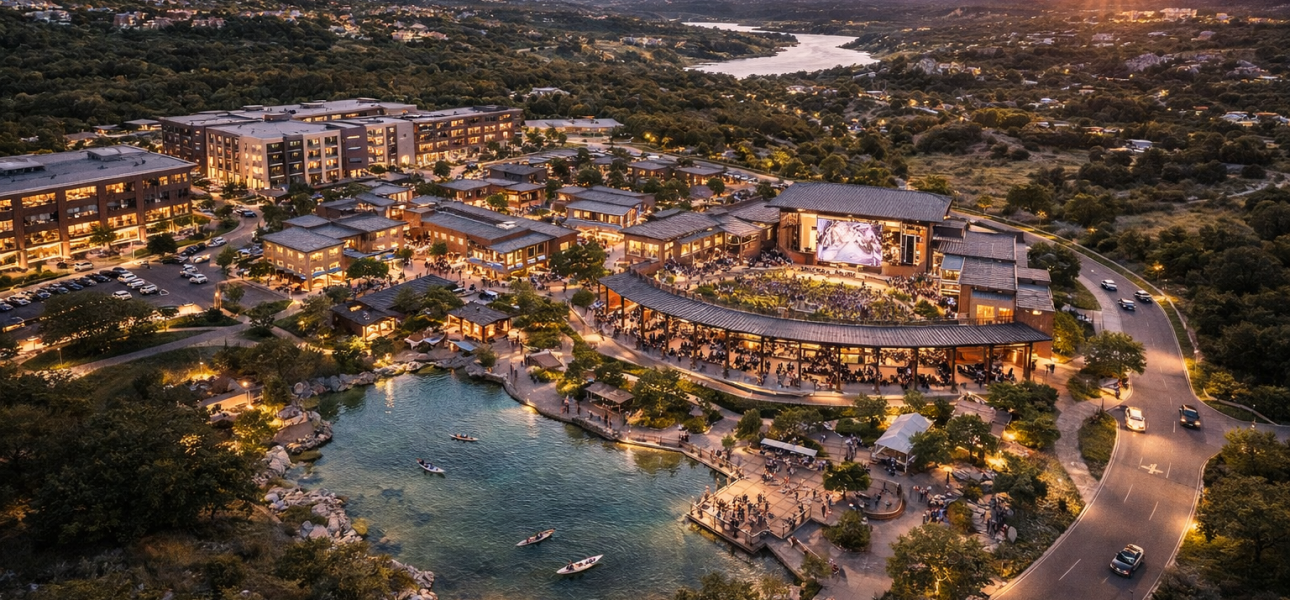
Why community commercial reprices around the megasites
Texas has roughly 6.5 GW of data-center capacity under construction and at least 248 projects in the pipeline, with JLL projecting the state becomes the world’s largest data-center market by 2030. But the durable real-estate opportunity for investors isn’t the campus — it’s everything that has to exist around it once thousands of permanent, high-wage workers arrive. Properties within a 3-5 mile radius of a project typically feel it first: neighborhood retail and restaurants for the workforce, mixed-use near new housing, last-mile logistics, and flex space for the contractors and suppliers that service the anchor.
What commercial bridge capital is for
Bridge loans finance the acquisition or repositioning of a commercial property while you execute a value-add or lease-up plan, then exit via stabilization-and-refinance or sale. In the boom corridors the common plays are:
- Neighborhood retail & restaurants leasing up as workforce population arrives.
- Mixed-use tied to new residential nodes near the megasites.
- Flex / light-industrial repositioned for contractor and supplier tenants.
- Adaptive reuse — older office or retail converted to a higher-and-better use that serves the new population.
Typical 2026 structure: rates of about 8%-12%, 65%-75% LTV on as-is value (up to ~80% loan-to-cost on a renovation scenario), interest reserves built in, and closings in 2-4 weeks for clean files.
Where the rooftops — and the demand — are landing
Follow the workforce. Taylor and Hutto are absorbing Samsung’s fab staff (~1,500 permanent by the end of 2026). Bastrop County, anchored by Elon Musk’s SpaceX, Boring Company and Starlink operations, has pushed past 117,000 residents toward a projected 130,000 within five years, with roughly 2,000 new homes in approvals and the “Snailbrook” company-town concept platted on 3,500 acres. Abilene is reshaping around the $500B Stargate campus. Each new residential node creates the retail, dining and service demand that commercial investors finance.
Incentives keep pulling capital in
Texas’s business-friendly posture is part of the magnet. The Chapter 403 incentive program (successor to the expired Chapter 313) and local property-tax rebates — like those Travis County extended to Tesla’s Gigafactory — keep drawing manufacturers and their supply chains, and each new anchor strengthens the commercial demand thesis in its corridor. (Incentive programs and eligibility change; confirm current terms with the relevant authority.)
Bancaverse’s role
Bancaverse™ is a private credit platform and brokerage for business purpose mortgage lending; we represent the borrower and are never the lending party. We package the scenario (rent roll, operating statement, renovation scope, exit) and shop it to private commercial bridge lenders. Explore Texas commercial value-add bridge loans, see the full loan products overview, or get matched with a lender →
Frequently Asked Questions
Does Bancaverse finance data centers or chip plants?
No. The megaprojects are funded by tech and infrastructure capital. Bancaverse finances the housing and community commercial real estate — retail, mixed-use, flex — that the boom’s workforce needs. That’s where the investor opportunity is.
What are Texas commercial bridge loan rates in 2026?
Generally about 8%-12% for private commercial bridge debt, at 65%-75% LTV on as-is value, on 12-36 month terms with interest reserves. Pricing depends on property type, leverage, exit and sponsor experience, and is subject to lender approval.
Which commercial property types benefit most from the boom?
Neighborhood retail and restaurants, mixed-use near new housing, flex/light-industrial for suppliers, and adaptive-reuse plays — all within a few miles of a data center or chip plant where the workforce lives and spends.
How fast can a commercial bridge loan close?
Often 2-4 weeks from term sheet on clean files. Preparing the package up front — rent roll, operating statement, renovation scope — shortens the timeline.
Does Bancaverse lend on commercial deals directly?
No. Bancaverse is a broker that arranges business-purpose commercial financing through private lenders. We don’t fund loans ourselves. All terms are subject to lender approval and applicable regulations.