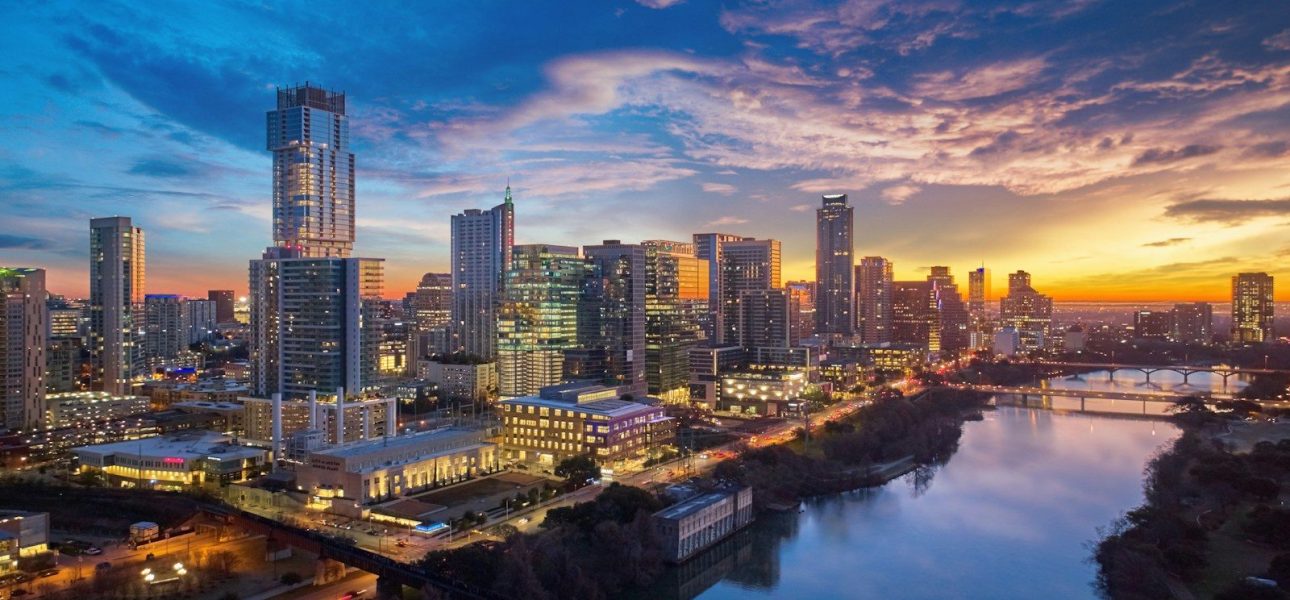
Austin has gone through the biggest price reset of any big market we track, and that’s changed the investor playbook. It still ranks #16 of 151 US metros for DSCR loan searches. Here’s how investor financing works in Austin and the surrounding suburbs, like Round Rock, Georgetown, Kyle and Hutto, and how Bancaverse™ gets lenders competing for your deal.
The Austin investor market at a glance
| Metric (Central Texas) | Now | Change |
|---|---|---|
| Typical home value | $417,977 | -4.7% vs. last year; -26.8% vs. peak |
| Typical rent | $1,622/mo | flat vs. last year |
| Annual rent ÷ home value | 4.7% | #17 of 19 metros we track |
| Homes for sale | 15,167 | -4.9% vs. last year |
| Typical days to go under contract | 53 | 60 a year ago |
Source: Zillow Research, metro-level data through 2026-08 (typical home value index, observed rent index, for-sale inventory, median days to pending).
Typical home values are down almost 5% on the year and about 27% below the peak. Rents are flat. Homes take close to two months to go pending, the slowest in our footprint. Look, that’s a buyer’s market. But the rent-to-price yield is still on the low side, so DSCR math is tight.
Which loan fits the Austin market right now
Bridge and value-add strategies fit better than straight DSCR here: buy at a discount, improve the property, and refinance or sell. DSCR works best on deals bought well below the old prices or with a bigger down payment. Ground-up financing is active in the outer suburbs, but lenders are cautious about resale prices.
Typical annual rent equals about 4.7% of the typical home value here, which ranks #17 of the 19 metros we track (the median is 5.7%). That’s on the low side, so rent alone often won’t carry a full-leverage loan. Value-add, more equity, or extra units help.
A financing playbook for Austin investors
- Flips: homes take about 53 days to go under contract, so budget for a longer resale window. Size your loan term and interest carry for it, and price your after-repair value off recent sales, not list prices.
- Buying below peak: typical values are 27% under the peak. That discount is the opportunity, but lenders will size your loan on today’s value, not the old highs.
- Rentals: rents are flat on the year, so underwrite today’s rent, not a future increase.
- Negotiating: inventory is close to last year’s level, a balanced market for buyers and sellers.
Areas we cover
Our lenders cover the Central Texas area, including Travis, Williamson, Hays, Bastrop and Caldwell counties. Send the property address and we’ll match your deal to lenders active in that county.
Loans we place in Austin
- DSCR loans for long-term rentals, sized on the rent the property brings in rather than your personal income.
- Fix-and-flip and rehab loans that cover the purchase and the renovation budget, paid out in draws.
- Bridge financing when you need to close quickly and refinance once the property is stabilized.
- Ground-up and spec construction loans for new builds and build-to-rent.
- Portfolio loans when you’re holding several doors and want one payment instead of five.
All of these are business-purpose loans for investors, not loans for a home you’ll live in.
What lenders look at on an Austin deal
Private lenders care about the asset first and you second, but both matter. Expect them to review:
- The deal itself: price, condition, the rehab plan and what the property is worth after.
- Rent or resale: what pays the loan back.
- Your history: how many similar projects you’ve done. First deals get done too, usually with more skin in the game.
- Credit (680+ is the usual floor on our platform) and enough cash for closing plus reserves.
- Size: loans start at $300,000.
Local factors in Austin: Lenders will look hard at your comparable sales, since prices moved a lot, at property taxes, and at short-term rental rules, which are strict in the City of Austin.
How Bancaverse™ works
Here’s how it works. You submit the deal one time: property, numbers, your plan. Lenders in our network look at it and send back offers. You pick the one that fits, and we help get it to the closing table.
No upfront fees, no deposits to us. Bancaverse™ earns a brokerage fee only at closing. If a lender requires a deposit on a large deal, it goes directly to that lender.
What to send with your Austin deal
- Address, purchase price and closing date
- Scope of work and budget for any rehab
- Expected after-repair value and how you got it
- Rent figures: leases or market rent comparables
- A short list of your past deals
- LLC or entity paperwork
- Proof of funds for the down payment and reserves
The more complete the package, the faster lenders can respond.
Austin investor loan FAQ
Is DSCR financing hard to get in Austin right now?
It’s harder than in higher-yield markets, because rents haven’t kept up with prices. Deals bought below today’s typical price, or with more equity, pencil out more often.
Can I use a bridge loan to buy a discounted Austin property?
Yes. Short-term bridge or fix-and-flip loans let you close fast, renovate, and then refinance into a DSCR loan or sell.
How big does my loan need to be?
We work on loans from $300,000 up, and most lenders on our platform want a credit score of 680 or higher. Smaller deals can still apply at bancaverse.com/apply.
Do I pay anything before closing?
Not to us. Our brokerage fee is earned at closing, and we never take deposits. On some large commercial loans a lender may ask for a deposit for third-party reports, which goes straight to the lender.
Get offers on your Austin deal
Submit your deal once and let lenders compete for it. Sign up for quotes at bancaverse.com/signup, or call us at (737) 300-9920.
Related: TX investment property loans · DSCR calculator · Fix-and-flip profit calculator · How to compare lender term sheets