Quick answer
DSCR loans let a Tennessee short-term rental investor qualify on the property’s projected rental income instead of personal tax returns, and the state’s two biggest STR markets now pull in opposite directions: Nashville has stopped issuing new non-owner-occupied STR permits, while the Smoky Mountains corridor around Gatlinburg and Pigeon Forge remains wide open and still posting strong revenue. Bancaverse arranges DSCR financing for both the existing-permit Nashville play and the cabin-market entry play.
Key takeaways
- Nashville is now a scarcity market for investor STR permits — the city stopped issuing new non-owner-occupied permits in residential zones in 2022, and existing permits are non-transferable and void on sale [1].
- The Smoky Mountains corridor is the opposite story — Gatlinburg alone carries over 7,300 active short-term rental listings with a market score of 83 out of 100 on AirDNA’s investability scale [2].
- Smoky Mountains revenue is still climbing even as rates soften — trailing-twelve-month revenue for the typical Gatlinburg listing rose nearly 33% year over year even though average daily rate slipped slightly, which is an occupancy and volume story, not a pricing one [2].
- DSCR qualification works differently for each play — a Nashville acquisition with an attached, non-transferable permit needs different underwriting than a ground-up cabin purchase in Sevier County.
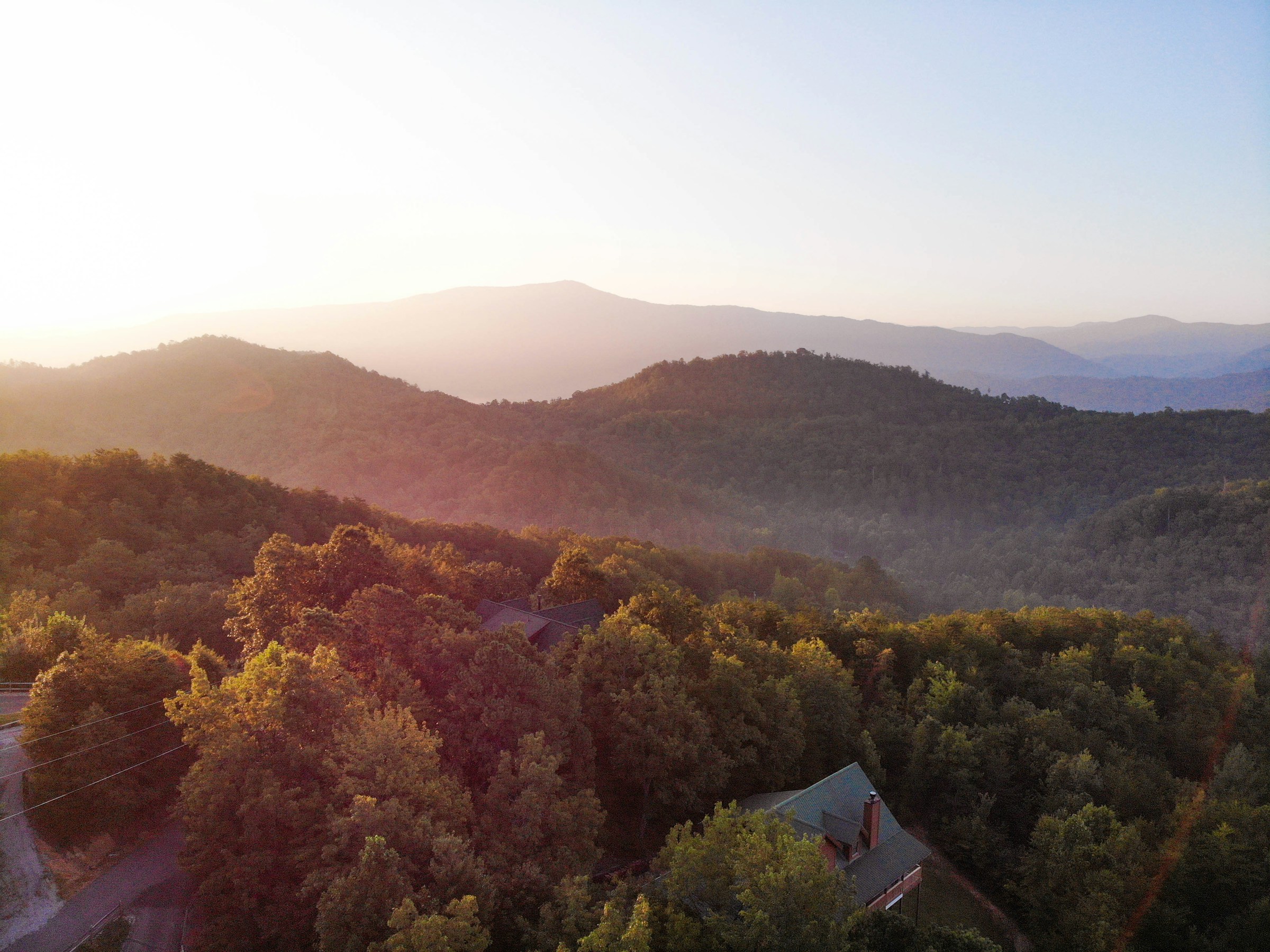
Tennessee’s two marquee short-term rental markets are drifting apart, and the financing conversation has to catch up. Nashville spent the last several years tightening the rules on investor-owned short-term rentals, while the Smoky Mountains cabin market kept absorbing new supply and, more importantly, kept converting that supply into revenue. Both markets are still financeable with a DSCR loan — a rental-income-qualified loan that looks at what the property earns rather than what the borrower’s W-2 says — but the underwriting story for each one is different enough that a Nashville investor and a Gatlinburg investor should not expect the same conversation with a lender. Bancaverse is a private credit platform and brokerage that arranges DSCR capital for both.
What is a DSCR loan, and how does it work for a short-term rental?
A debt-service coverage ratio (DSCR) loan qualifies a rental property purchase or refinance based on the income the property generates relative to its debt payment, rather than the borrower’s personal income or tax returns. For a long-term rental that income is straightforward — a lease. For a short-term rental, lenders instead look at trailing or projected nightly-rate revenue, usually pulled from platforms like AirDNA, and apply a haircut for seasonality and vacancy before calculating the ratio. That makes the underlying market data — occupancy, average daily rate, and revenue trend — the whole conversation, which is why Nashville and the Smoky Mountains require different files even though both are Tennessee STR loans.
Why has Nashville stopped issuing new investor short-term rental permits?
Since 2022, Nashville has not issued new non-owner-occupied STR permits in residential zones. Existing permits remain valid, but they are non-transferable and become void the moment the underlying property sells — a “slow attrition” policy rather than an outright ban [1]. Owner-occupied short-term rentals, where the host lives in the home and rents part or all of it, are still permitted in most residential areas outside a handful of designated no-STR districts, and a Short Term Rental Appeals Board hears disputes over denied or revoked permits [1]. For an investor, the practical effect is that an existing, transferable-in-spirit-but-not-in-law investor permit attached to a property is a scarce asset, and buying one requires structuring the deal so the permit’s legal non-transferability does not blow up the business plan.
What this means for DSCR underwriting in Nashville
Because a Nashville investor permit voids on sale, a lender cannot simply underwrite “the current STR income” and assume it transfers with the deed. The more common and more financeable path is either (a) acquiring the property as a long-term or mid-term rental and qualifying the DSCR loan on that lease income instead, or (b) working with the seller’s existing operating entity structure so the permit’s holder does not technically change, which requires legal review before the loan is underwritten, not after.
Why does the Smoky Mountains corridor look so different?
Gatlinburg and Pigeon Forge sit in unincorporated Sevier County and inside city limits that have, for years, actively courted short-term rental investment as the core of the local tourism economy — there is no permit freeze here. Gatlinburg alone shows more than 7,300 active listings, a 57% average occupancy rate, a $342 average daily rate, and a market investability score of 92 out of 100 [2]. Trailing-twelve-month revenue for the typical active listing rose almost 33% year over year even as ADR eased slightly and occupancy was roughly flat — in other words, more nights are being booked and total demand is growing, even though nightly pricing power has cooled a little [2]. For a DSCR lender, that is a market with a long, verifiable data history and genuine demand depth, which supports financing new-construction and turnkey cabin purchases on projected income.
Comparing a Nashville acquisition against a Smoky Mountains cabin purchase? Send us both scenarios and Bancaverse will show you how the DSCR numbers and lender appetite differ for each.
How do Nashville and the Smoky Mountains compare for a DSCR-financed STR investor?
| Market | Permit environment | Revenue signal | DSCR financing note |
|---|---|---|---|
| Nashville (Davidson Co.) | No new investor permits since 2022; existing permits non-transferable [1] | Strong urban demand, but supply is capped | Underwrite on long-term lease income unless permit structure is verified pre-close |
| Gatlinburg (Sevier Co.) | No permit freeze; STR-friendly zoning | 7,300+ listings, 57% occupancy, revenue +32.8% YoY [2] | Deep AirDNA data history supports income-based qualification |
| Pigeon Forge (Sevier Co.) | No permit freeze; STR-friendly zoning | Comparable listing density to Gatlinburg | Same underwriting approach as Gatlinburg; comps drawn from adjacent submarket |
| Chattanooga / Knoxville | More restrictive than the Smokies, less restrictive than Nashville | Growing but thinner STR data history | Often underwritten on long-term rent as the more conservative fallback |
Is a mid-term rental a workable middle path in Nashville?
For investors who want Nashville exposure without the permit-scarcity problem, a mid-term rental strategy — furnished units leased for 30 days to several months to traveling healthcare workers, corporate relocations, or extended-stay guests — sits outside Nashville’s short-term rental permitting regime entirely, since most municipal STR ordinances, including Nashville’s, define short-term as a lease under 30 days. A DSCR loan can still qualify a mid-term rental, typically using either a documented furnished-rental income history or a long-term-lease-equivalent projection, whichever the lender’s program supports. It will not replicate Smoky-Mountains-level short-term revenue, but it avoids Nashville’s non-transferable permit problem altogether, which is why it has become a common fallback for investors who want Nashville-market exposure without competing for a scarce permit.
How does insurance differ for a short-term rental compared with a standard long-term rental?
A standard landlord policy is priced around a tenant occupying the unit under a lease, with liability exposure tied to that tenant and their guests. A short-term rental turns over strangers every few days, which most insurers treat as a materially different, higher-liability use — and a standard landlord policy may not cover it at all, or may exclude a claim outright if the insurer later determines the unit was being used as a short-term rental without the correct endorsement. Lenders underwriting a DSCR-STR loan increasingly ask for proof of a short-term-rental-specific policy or endorsement before closing, not just a certificate of insurance that does not specify the use.
What does a lender actually want to see in a Tennessee DSCR-STR file?
- A verified revenue history or a defensible projection. Established Smoky Mountains listings can use trailing twelve-month platform data; new construction needs a market-based projection from comparable, currently operating cabins.
- Clarity on permit status, in writing, before close. In Nashville that means confirming whether the current permit can legally attach to the buyer’s entity; in the Smoky Mountains it means confirming county or municipal STR registration is current.
- A management plan. Whether self-managed or through a property manager, lenders want to see who runs bookings, cleaning, and maintenance, since that affects the durability of the income used to qualify the loan.
- Insurance built for short-term occupancy, not a standard long-term-rental landlord policy, since usage and liability exposure differ.
For the broader mechanics of how DSCR qualification compares across lender boxes, see our DSCR loan comparison guide, and if the exit on a renovation project becomes a rental hold instead of a sale, our SFR and RTL financing guide covers that transition. For a side-by-side on private capital versus a bank loan for either strategy, see hard money vs. bridge loan vs. DSCR.
How Bancaverse arranges Tennessee STR-DSCR capital
Bancaverse is a private credit platform and brokerage for business-purpose mortgage lending; we do not lend our own balance sheet. We take a Tennessee short-term rental deal — whether it is a permit-attached Nashville property or a new cabin purchase in Sevier County — and place it with DSCR lenders whose programs are built for the specific revenue profile and regulatory picture of that submarket, rather than a one-size underwriting box that does not distinguish Nashville’s permit scarcity from the Smokies’ deep, STR-friendly demand.
Frequently asked questions
Can I still buy a short-term rental in Nashville as an investor?
You can buy the property, but new non-owner-occupied STR permits have not been issued in residential zones since 2022, and existing permits do not transfer on sale. Most investor purchases in Nashville now underwrite to long-term rental income unless the permit situation is separately verified [1].
Is the Smoky Mountains cabin market still a good DSCR play in 2026?
The data supports it: Gatlinburg’s typical listing generated nearly 33% more trailing-twelve-month revenue than a year earlier, driven by occupancy and volume rather than rate increases, in a market with no permit freeze [2].
Do I need tax returns for a DSCR short-term rental loan?
No. DSCR loans qualify on the property’s income, not personal income, though lenders will want documentation of the rental history or a market-based revenue projection.
How is a short-term rental’s income calculated for DSCR purposes?
Lenders typically pull trailing platform revenue data or a third-party market rent/revenue estimate, then apply a vacancy and seasonality adjustment before comparing it to the proposed debt payment.
What happens if Sevier County tightens STR rules the way Nashville did?
It is a risk worth underwriting for, which is why lenders and investors alike should treat current permit-friendliness as a present condition, not a permanent guarantee, and build some cushion into the debt-service assumptions.
Can a DSCR loan refinance an existing short-term rental?
Yes. A cash-out or rate-and-term DSCR refinance is common once a property has an established operating history, and it can also be used to take out a construction or bridge loan on a newly built cabin.
Which market is easier to finance, Nashville or the Smoky Mountains?
Neither is universally easier — Nashville has deeper urban demand but a capped, complicated permit supply; the Smoky Mountains has an open permit environment and a long data history but more seasonal revenue. The right answer depends on the specific property and your operating plan.
Bancaverse™ can help you get private capital for your residential real estate project. Here are the links to schedule a call or apply: Schedule a call · Apply now
Sources & references
- NASTRA (Nashville Short Term Rental Association), “Short Term Rentals in Nashville 2026: What the Rules Really Say,” 2026. https://nastra.org/short-term-rentals-in-nashville-2026-what-the-rules-really-say-and-why-they-matter/
- AirDNA, Gatlinburg, TN short-term rental market data, updated September 8, 2026. https://www.airdna.co/vacation-rental-data/app/us/tennessee/gatlinburg/overview