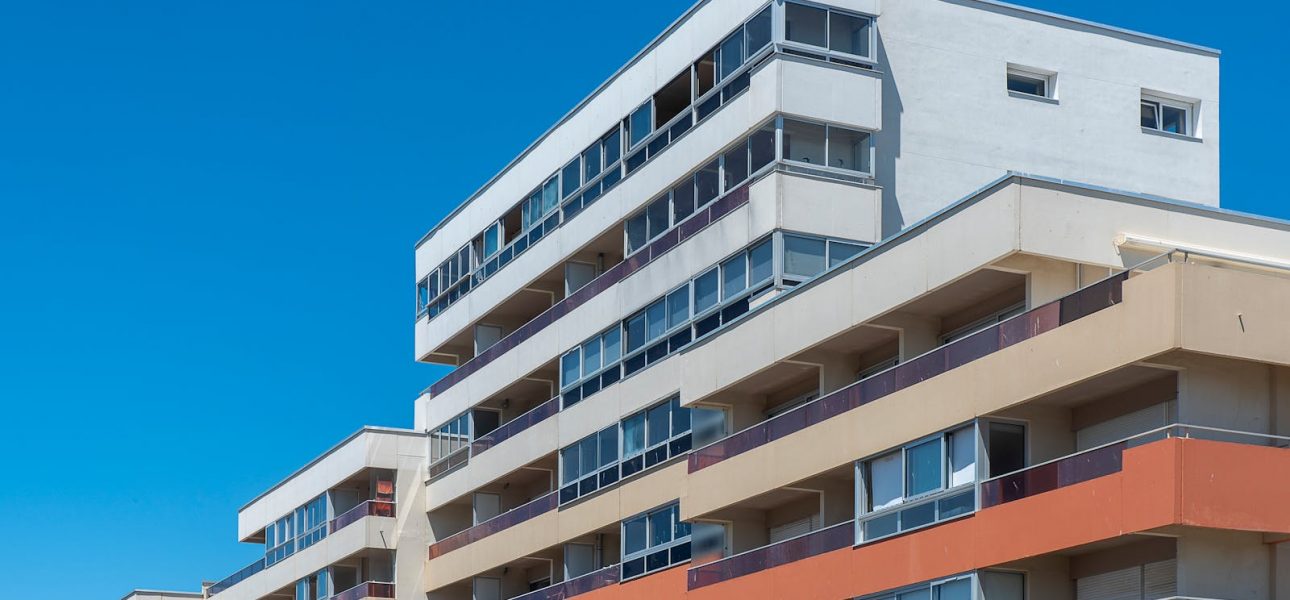
Multifamily loans finance apartment properties with five or more units, and they work differently from a single-family mortgage: the lender underwrites the building’s income, not just the borrower. The property’s net operating income (NOI) and debt service coverage ratio (DSCR) decide how much it can borrow, which is why a well-run apartment building can support far more leverage than its owner’s personal income would.
⚡ Quick Answer: A multifamily loan funds 5+ unit apartment properties as a business-purpose, income-based loan. Lenders size it on NOI and DSCR (usually 1.20–1.25+), with 25–35% down and terms that range from short-term bridge to long-term agency debt. Bancaverse matches your apartment deal to multifamily lenders. Get matched →
What Counts as a Multifamily Loan?
In lending terms, “multifamily” usually means 5+ units. Two-to-four-unit properties are still financed like residential investment loans (including DSCR). Once you cross into 5+ units, the property is treated as commercial-grade income real estate, and underwriting shifts from your personal income to the building’s performance. See our multifamily financing page for the programs we place.
How Do Lenders Underwrite a Multifamily Loan?
Three numbers drive almost every multifamily decision:
- NOI (net operating income) = gross rents minus operating expenses (before debt). It is the engine of value.
- DSCR = NOI ÷ annual debt service. Most lenders want 1.20–1.25+, meaning income exceeds the loan payment by 20–25%.
- LTV / LTC = how much they’ll lend against value or cost — commonly 65–75%, so plan on 25–35% down.
Because the building qualifies, strong NOI can offset a thinner borrower profile — the opposite of conventional residential lending.
What Are the Main Types of Multifamily Loans?
| Type | Best for | Term |
|---|---|---|
| Multifamily bridge | Value-add, lease-up, fast close | 1–3 yr, interest-only |
| Agency (Fannie/Freddie) | Stabilized, long-term hold | 5–30 yr |
| Bank / portfolio | Flexible, relationship deals | 5–10 yr |
| Construction | Ground-up apartments | Draw-based, short-term |
How Much Down Payment Do You Need?
Plan on 25–35% of purchase or cost, plus reserves. Value-add deals often use a bridge loan to acquire and renovate at higher leverage on cost, then refinance into long-term agency or bank debt once the property is stabilized and the NOI supports it.
How Do You Get a Multifamily Loan?
Package the property’s financials first: a current and pro-forma rent roll, trailing 12-month operating statements (T-12), the purchase price or value, your business plan, and your experience. Because multifamily programs vary widely by lender and asset, comparing options matters — Bancaverse represents the borrower, structures the file, and routes it to multifamily lenders whose box fits, with no upfront fee to review the deal. For the business-purpose framing, the CFPB is the reference; Investopedia has a clear NOI primer.
Have an apartment deal? Get matched to a multifamily lender →
Which Markets Does Bancaverse Serve?
Bancaverse places multifamily deals nationwide, with deep activity in the investor markets we know best: Texas (Dallas–Fort Worth, Houston, San Antonio, Austin), Florida (Tampa, Orlando, Jacksonville, Miami), Georgia (Atlanta), the Carolinas (Charlotte, Raleigh, Greenville, Charleston), Arizona (Phoenix), Colorado (Denver), and Utah (Salt Lake City). If your apartment deal is in one of these growth markets, we likely have lenders actively quoting it.
Frequently Asked Questions
Q: How many units make a property multifamily?
A: For lending, 5+ units. Two-to-four-unit properties are financed as residential investment loans, including DSCR.
Q: Do multifamily loans use my personal income?
A: Primarily no — they are underwritten on the building’s NOI and DSCR. Your experience and creditworthiness still matter, but the property carries the loan.
Q: What DSCR do multifamily lenders require?
A: Commonly 1.20–1.25+, though it varies by program and leverage. Higher DSCR generally unlocks better terms.
Q: Can I buy a value-add apartment with low occupancy?
A: Yes — that is a classic bridge-loan use. You acquire, raise occupancy and NOI, then refinance into long-term debt.
Q: How much down payment is typical?
A: Usually 25–35% of purchase or cost, plus reserves, depending on the program and the property’s performance.