Quick answer
Multifamily bridge loans in Florida are short-term, business-purpose loans — usually 12 to 36 months — that finance the acquisition or refinance of an apartment property that is not yet stabilized, funding renovations and carrying the asset through lease-up until it qualifies for permanent debt or a sale. In Florida the loan is shaped by three local factors: a judicial foreclosure process, insurance costs that sit directly in net operating income, and a supply wave in Tampa, Orlando, Jacksonville, and South Florida that has created value-add and lease-up opportunities for sponsors who buy at today’s basis. Bancaverse arranges this capital through private-credit and debt-fund lenders that actively want Florida multifamily.
Key takeaways
- Bridge is the right tool when the property needs time — a renovation program, a lease-up, or an operational turnaround that permanent lenders will not underwrite yet.
- Insurance is underwritten line by line — Florida lenders size the loan to NOI after actual windstorm and property premiums, so a competitive quote directly increases proceeds.
- Florida is a judicial-foreclosure state — the borrower may redeem until the certificate of sale is filed, and lenders price that timeline in [1].
- Interest reserves and milestone-based draws are standard — structure them to the business plan, not to the maximum a lender offers.
Florida delivered an enormous amount of new apartment supply over the past few years, and the effect on sponsors has been uneven. Newly built communities in Tampa, Orlando, and Jacksonville are leasing up more slowly than their construction loans assumed; older garden-style properties that were never renovated are trading at a basis that makes a value-add plan work again; and South Florida remains supply-constrained but expensive to insure. In each case the financing answer is the same instrument — a multifamily bridge loan — structured differently. This guide explains how Florida bridge loans are sized, what local rules and costs matter, how the major metros compare, and how Bancaverse arranges the capital.
What is a multifamily bridge loan, and when is it the right tool?
A multifamily bridge loan is short-term debt that carries an apartment property from a transitional state to a stabilized one. It funds the purchase (or refinances an existing loan, often a maturing construction loan), provides a renovation or capital-expenditure budget released in draws, and usually includes an interest reserve so the property can carry its own debt service while occupancy and rents move toward the business plan. The exit is a permanent loan — agency, bank, life company, or CMBS — or a sale.
Bridge is the right tool in three Florida situations: a value-add acquisition where units need renovation before rents can move; a lease-up on a newly delivered property whose construction loan is maturing before stabilization; and a recapitalization where the current loan no longer fits the asset’s NOI and the sponsor needs time rather than a permanent solution at the wrong moment. Our multifamily bridge loan guide for Texas, Tennessee, Kentucky, and Georgia covers the same structures in neighboring states.
How do lenders size a Florida multifamily bridge loan?
In-place and stabilized NOI
Bridge lenders underwrite two sets of numbers: the property’s current net operating income, which tells them what the loan can carry today, and the stabilized NOI in the business plan, which tells them what the exit loan will support. The initial funding is sized to the current picture; the total loan including future funding is tested against the stabilized picture at a debt yield and coverage the lender believes a takeout lender will accept.
The Florida insurance line
No expense line moves a Florida multifamily underwriting more than insurance. Windstorm coverage, property coverage, and flood coverage where required are underwritten at the actual quoted premium, and lenders will not accept last year’s number if the renewal is higher. A sponsor who obtains a competitive, bindable quote before submitting the file often unlocks meaningfully more proceeds than one who leaves the line to the lender’s assumption. Bancaverse coordinates the insurance quote alongside the loan request for exactly this reason.
Interest reserves and milestone draws
Florida bridge loans commonly include an interest reserve sized to the months until the property covers its own debt service, and a capital-expenditure holdback released against completed unit renovations or common-area work. The lender inspects, the sponsor submits lien waivers, and funds release in tranches. Sizing the reserve to a realistic lease-up schedule — not an optimistic one — is what keeps the loan from running short.
Have a Florida apartment deal that needs time to stabilize? Request a Florida multifamily bridge term sheet — send the rent roll, T-12, and business plan, and Bancaverse will size the loan across our lender bench.
What Florida-specific rules affect a multifamily bridge loan?
Judicial foreclosure and the right of redemption
Florida is a judicial-foreclosure state: a lender must file suit and obtain a judgment before the clerk conducts a sale. Under Florida Statutes § 45.0315, the mortgagor may redeem the property at any time before the later of the clerk’s filing of the certificate of sale or the time specified in the judgment, by paying the full indebtedness plus the lender’s reasonable foreclosure costs [1]. For a lender, that means a longer and less predictable worst-case timeline than in a nonjudicial state, and the way sponsors offset it is with experience, a credible plan, and reserves. Bancaverse presents Florida files with those points front and center.
The Live Local Act and workforce-housing exemptions
Florida’s Live Local Act created ad valorem property-tax exemptions for qualifying newly constructed multifamily developments with more than 70 units that set aside units for households earning up to 80 percent of area median income (100 percent exemption for those units) and between 80 and 120 percent of AMI (75 percent exemption), subject to rent limits and an annual application to the county property appraiser [2]. For a lease-up bridge on a newly delivered property, a qualifying exemption changes the tax line in NOI and therefore the exit loan. The statute has been amended since enactment, so sponsors should confirm current-year requirements and deadlines with counsel; Bancaverse flags the exemption to lenders when it applies.
Condominium and association considerations
Sponsors evaluating fractured condominium deals or deconversions in South Florida should expect lenders to ask about association reserves, inspection requirements, and pending assessments, all of which affect NOI and exit. Those files close, but they require more documentation up front.
How do Florida’s multifamily markets compare for bridge borrowers?
Tampa Bay
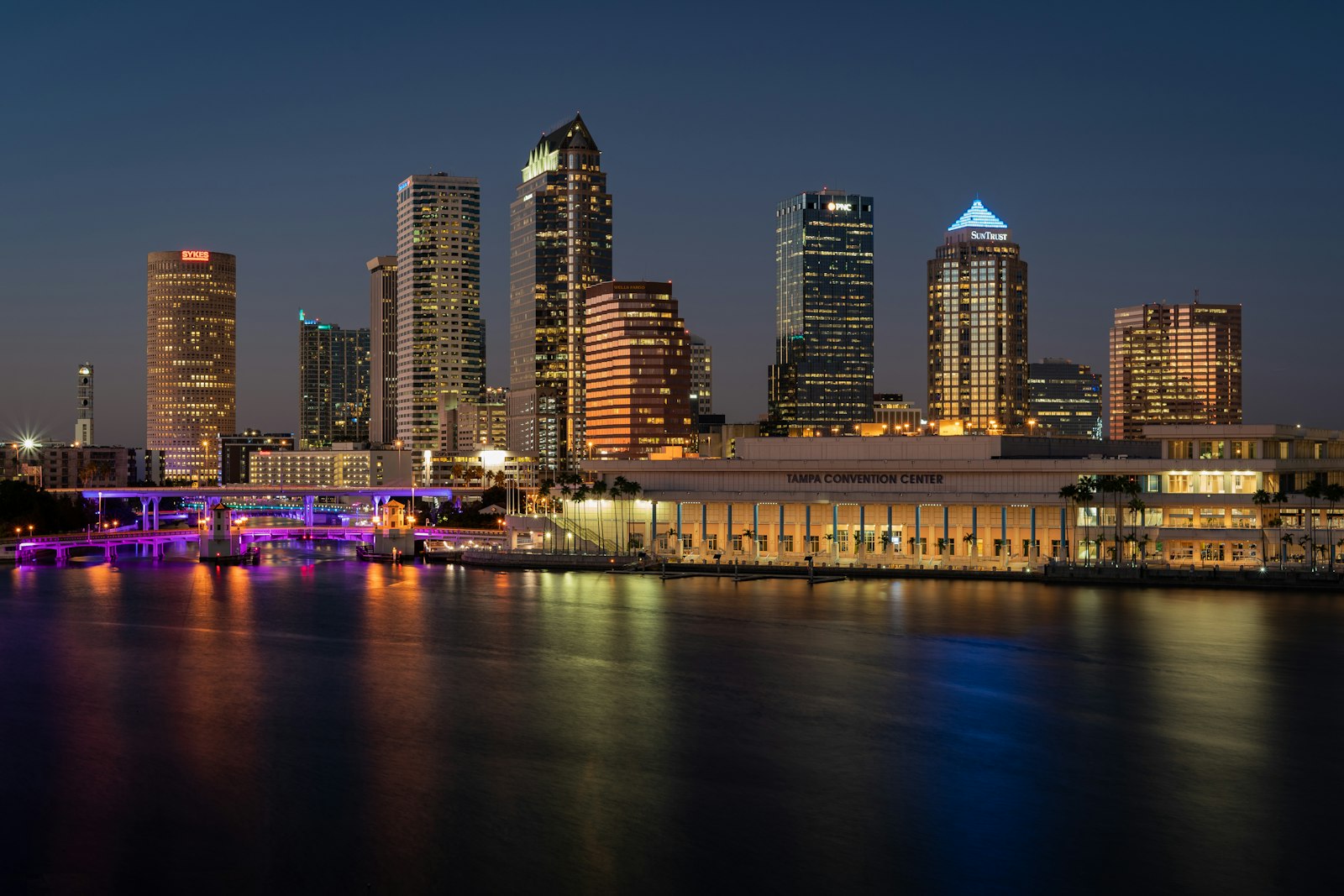
Tampa absorbed a large delivery pipeline and continues to attract corporate relocations and in-migration. Concessions on new product have made lease-ups slower than pro forma, which is precisely where a lease-up bridge earns its place. Value-add on 1980s–1990s garden product in Hillsborough and Pinellas counties remains active. Tampa’s average asking rent is INSERT VERIFIED STAT and occupancy is INSERT VERIFIED STAT.
Orlando
Orlando’s renter base is anchored by tourism, healthcare, and a growing tech and simulation corridor, and it remains one of the state’s deepest markets for workforce-priced apartments. Bridge demand here skews toward value-add repositioning of older communities along the I-4 corridor and lease-ups in the southeast submarkets.
Jacksonville
Jacksonville offers the lowest entry basis of the major Florida metros with a large, diversified employment base in logistics, finance, and healthcare. Sponsors use bridge debt for heavy-lift value-add where the renovation budget is a large share of total cost, and lenders that know Duval and St. Johns counties underwrite it well.
South Florida (Miami-Dade, Broward, Palm Beach)
South Florida is supply-constrained relative to the rest of the state, with high rents and the highest insurance costs. Bridge loans here are often recapitalizations or condo-related transactions rather than classic garden value-add. Insurance quotes are the gating item on every file.
| Metro | Dominant bridge use case | Key underwriting sensitivity | Typical exit |
|---|---|---|---|
| Tampa Bay | Lease-up of new deliveries; garden value-add | Concessions and absorption pace | Agency permanent loan after stabilization |
| Orlando | Repositioning older I-4 corridor communities | Renovation timeline and rent premium support | Agency or bank permanent loan; sale |
| Jacksonville | Heavy value-add at low basis | CapEx budget accuracy; contractor capacity | Agency loan; sale to yield buyer |
| South Florida | Recapitalization; condo/deconversion | Windstorm and flood insurance premiums | Life company or bank loan; sale |
What does a fundable Florida bridge file look like?
- Trailing-12 operating statement and current rent roll with concessions and delinquency shown, not netted.
- Business plan with unit-by-unit renovation scope, cost per unit, and the rent premium supported by renovated comps in the same submarket.
- Bindable insurance quote for property, windstorm, liability, and flood where required.
- Sponsor track record in Florida or comparable Sun Belt markets, with completed value-add examples.
- Exit analysis showing the stabilized NOI, the takeout loan it supports, and the timeline to reach it.
Sponsors whose construction loan is the debt being refinanced should also read our construction and takeout financing guide, and those weighing bridge against a permanent refinance in a higher-rate market will find the framework in the CRE maturity wall refinance playbook directly applicable to Florida. The full family of bridge and distressed-debt solutions lives in our bridge and distressed CRE debt hub.
How Bancaverse arranges Florida multifamily bridge capital
Bancaverse is a private credit platform and brokerage for business-purpose mortgage lending. We do not lend our own balance sheet. We package the property, the plan, and the sponsor to the standard debt-fund and private-credit committees expect, coordinate the insurance and valuation work that decides proceeds in Florida, and place the file with lenders competing for Florida multifamily. Because appetite for Florida varies sharply by lender — some price insurance risk conservatively, others have built programs around it — shopping the file across the bench is what produces a term sheet that actually fits the business plan.
Frequently asked questions
How long is a Florida multifamily bridge loan?
Most bridge loans run 12 to 36 months, often with extension options tied to performance milestones such as occupancy or debt-service coverage. The term should match the renovation and lease-up schedule plus time to close the permanent loan.
Can a bridge loan refinance a maturing construction loan in Florida?
Yes. A lease-up bridge that takes out a construction loan before stabilization is one of the most common uses in Tampa, Orlando, and Jacksonville right now. The lender sizes the loan to current occupancy and the path to stabilization.
Why does insurance matter so much on Florida bridge loans?
Because it is a large expense line that sits directly in net operating income, and lenders underwrite the actual quoted premium. A higher premium lowers NOI, which lowers both the bridge proceeds and the takeout loan.
What is Florida’s foreclosure process for a multifamily loan?
Florida uses judicial foreclosure, and the borrower may redeem by paying the debt in full until the clerk files the certificate of sale or the deadline set in the judgment [1]. Lenders account for that timeline when they underwrite sponsor quality and reserves.
Does the Live Local Act help a lease-up bridge loan?
It can. A qualifying newly constructed property with more than 70 units that meets the affordability set-asides may receive a partial or full property-tax exemption on those units, which raises NOI and supports the exit loan [2]. Requirements and deadlines have changed since 2023, so confirm current rules before underwriting the benefit.
Do Florida bridge lenders require recourse?
Many bridge loans are non-recourse with standard carve-out guaranties; some lenders require partial recourse on heavier value-add or lease-up deals. The structure is negotiable and depends on leverage, sponsor strength, and the plan.
Bancaverse™ can help you get private capital for your commercial real estate project. Here are the links to schedule a call or apply: Schedule a call · Apply now
Sources & references
- Florida Statutes § 45.0315, Right of redemption (2025). https://www.flsenate.gov/Laws/Statutes/2025/45.0315
- Holland & Knight, “Florida’s Live Local Act and Important Tax Exemption Deadlines” (Oct 2023) — 71+ unit threshold, 80%/120% AMI tiers, 100%/75% exemptions, annual application. https://www.hklaw.com/en/insights/publications/2023/10/floridas-live-local-act-and-important-tax-exemption-deadlines
- Reviewer to add source URLs for each INSERT VERIFIED STAT (Tampa asking rent and occupancy) — suggested: CoStar/Apartments.com market report, RealPage, or Yardi Matrix Tampa report.