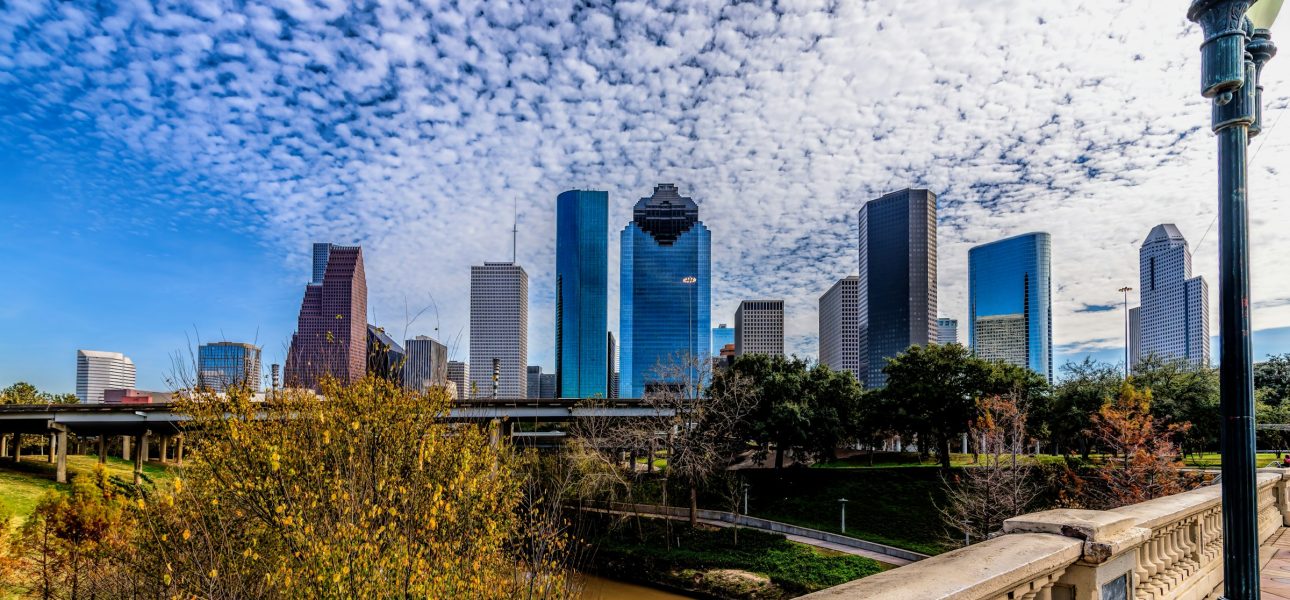
Quick answer: Houston and Dallas-Fort Worth office towers are hitting loan maturity at the same moment vacancy sits near or above 24-25%, so a growing share of sponsors are pairing a maturing office loan with a repositioning plan instead of a par refinance. Bridge capital can fund the acquisition or payoff, the conversion or repositioning budget, and the carry through lease-up, with a conventional or agency takeout once the asset stabilizes as multifamily or another use.
Key takeaways
- Houston office vacancy stood at 24.1% as of July 2026, with the broader Dallas-Fort Worth market near 25% overall, though top submarkets like Preston Center run far tighter.
- More than $100 billion in CMBS loans mature nationally in 2026, and appraisal data cited by CRE Daily shows office valuations down as much as 55.8% from origination on some loans headed for default.
- Dallas delivered 584 office-to-apartment units in 2024 alone — the second-most of any U.S. city — and the city’s Tax Increment Financing tools are being positioned to help close conversion funding gaps.
- Bridge financing lets a sponsor control a distressed or under-leased office asset through acquisition, construction/conversion, and lease-up, with a takeout planned once the repositioned property stabilizes — Bancaverse arranges this capital, it does not lend its own balance sheet.
Why Are Texas Sponsors Looking at Office Conversion Bridge Loans Right Now?
A large slice of the commercial mortgage-backed securities (CMBS) market — over $100 billion — comes due in 2026, and industry data compiled by CRE Daily suggests more than half of that volume, roughly $57.7 billion, is at elevated risk of defaulting at maturity.[3] Office loans are a disproportionate share of that distress: some maturing office loans are showing appraised values down as much as 55.8% from their original underwriting.[3]
That combination — a loan coming due and a building worth a fraction of what it was worth when the loan was written — is exactly the scenario where a par refinance from a bank is no longer realistic. A sponsor facing that math has three practical paths: sell at a loss, hand back the keys, or reposition the asset into a use the market actually wants and bridge the capital gap until stabilized. For a growing number of Houston and DFW office owners, repositioning — often office-to-multifamily, sometimes medical, hospitality, or mixed-use — is becoming the more attractive option.
How Bad Is the Texas Office Maturity Wall, Really?
CoStar’s national research points to office vacancy staying roughly flat around 14% through 2026 on a nationwide basis.[9] Texas’s two largest metros are running well above that national figure, which is precisely why Houston and DFW are producing more conversion candidates than most other markets.
Even so, credit performance in Texas has held up better than headline vacancy numbers might suggest. CRED iQ’s April 2026 CMBS distress tracking found that Houston and Dallas, alongside Miami, Phoenix, and Atlanta, continued to post sub-10% overall CMBS distress rates — more resilient than gateway markets, even as office remained the single most distressed property type nationally.[8] That is the honest picture: Texas office fundamentals are genuinely under pressure, but the gap between “distressed” and “everything else” is exactly where conversion-focused bridge capital does its work — funding buildings that need a new plan before they become forced sales.
Houston Office Market: Why Conversion Bridge Capital Makes Sense Here
Houston’s office vacancy rate reached 24.1% as of July 2026, according to CRE Daily’s review of the metro’s mid-year data — yet investment sales activity has not stalled.[1] The market still drew roughly $1.5 billion in office investment sales through July 2026, good for sixth nationally, with trophy trades like Williams Cos.’s roughly $300 million purchase of Williams Tower and TPG’s approximately $224.3 million acquisition of Hess Tower showing that capital is still chasing the right Houston office assets.[1]
The more telling number for conversion sponsors: Houston’s new competitive office pipeline has shrunk to just 823,528 square feet, about 0.3% of existing stock — below the national average — while medical office and life-science space continues to lead the market, with 101.2 million square feet across 896 properties.[1] That is a market voting with its feet: new office construction has effectively stopped, and the buildings that don’t fit tenant demand are the ones sponsors are now identifying for reuse.
Downtown Houston is already producing conversion deal flow. A 24-story, roughly 542,000-square-foot tower at 919 Milam Street — built in 1956, less than 20% occupied at the time of its recent sale, and flagged by an earlier Aecom study as a strong conversion candidate — was acquired by an out-of-state apartment developer in mid-2026 specifically for residential repositioning.[7] Separately, a downtown Houston office tower has moved forward with a roughly $26.5 million apartment conversion.[6] These are exactly the profile of deal bridge capital is built for: an under-leased, older-vintage office asset acquired below replacement cost, with a defined capital budget to reposition it and a clear residential exit.
DFW Office Market: Where Is Dallas-Fort Worth Conversion Activity Concentrated?
Dallas-Fort Worth’s overall office vacancy sits close to 25%, and HALL Structured Finance’s June 2026 review pegged the wider DFW regional average even higher, near 27.5%, with Uptown Dallas at 23.8% vacancy.[4] But averages obscure the real story: Preston Center, one of Dallas’s most sought-after office submarkets, ran a vacancy rate of just 5.9% in the same data set, and Class A product actually posted positive net absorption of 283,282 square feet in the first quarter of 2026 even as Class B space saw 493,481 square feet of negative absorption.[4] That bifurcation — tight, well-amenitized Class A buildings next to struggling, older Class B towers — is the same pattern driving conversion decisions nationally, and it is playing out block by block in downtown and Uptown Dallas.
Dallas is also, right now, one of the more active office-conversion markets in the country. The city delivered 584 new office-to-apartment units in 2024 alone — the second-highest total of any U.S. city that year, trailing Manhattan by only four units — and Dallas carries the ninth-largest adaptive-reuse pipeline nationally.[2] Downtown Dallas Inc. commissioned an Aecom study of conversion candidates, and city officials have pointed to Tax Increment Financing (TIF) funds as a tool that can help “bridge the project gap” on conversions that include affordable units.[2] Live examples already underway include the conversion at Santander Tower (Peridot at Santander Tower) and The Sinclair, built out of the former Energy Plaza Tower.[2] Nationally, Dallas ranks among the top cities in the 90,300-unit U.S. office-to-residential conversion pipeline reported in early 2026 — a pipeline that grew 28% year-over-year.[5]
For a deeper look at how the broader Texas maturity wall is reshaping refinance decisions across property types, see Bancaverse’s Texas CRE maturity wall 2026 refinance playbook.
Houston vs. DFW: Office Conversion Snapshot
| Metric | Houston | Dallas-Fort Worth |
|---|---|---|
| Overall office vacancy | 24.1% (July 2026)[1] | ~25% overall; DFW regional avg ~27.5%[4] |
| Tightest tracked submarket | Medical office/life science leads demand (101.2M SF)[1] | Preston Center, 5.9% vacancy[4] |
| New competitive office pipeline | 823,528 SF (~0.3% of stock)[1] | Class A posting positive absorption in top submarkets[4] |
| Recent conversion deal flow | 919 Milam St. tower; ~$26.5M downtown apartment conversion[6][7] | 584 office-to-apartment units delivered in 2024 (2nd most in U.S.)[2] |
| CMBS distress rate (Apr. 2026) | Sub-10%, more resilient than gateway metros[8] | Sub-10%, more resilient than gateway metros[8] |
Sitting on a Houston or DFW office asset with a loan maturing into a repriced market? Bancaverse can help you get private capital for your commercial real estate project. Apply
How Does Office-to-Multifamily Conversion Bridge Financing Actually Work?
A conversion bridge loan is structured to follow the project through its real risk curve, not force it into a single, static refinance. Typically that means capital is arranged to cover the acquisition or existing-loan payoff, a defined construction/conversion budget for the residential (or alternative-use) buildout, and an interest reserve to carry the project through permitting, construction, and initial lease-up. Bancaverse arranges this kind of financing for sponsors — as a broker connecting borrowers to private capital, not as a balance-sheet lender — with the expectation that the project refinances into a conventional, agency, or DSCR takeout loan once it stabilizes as a leased, income-producing residential or mixed-use property.
For background on how office-to-residential financing has scaled into a mainstream strategy nationally, see Bancaverse’s article on office-to-residential conversions hitting critical mass, and for a broader look at how lenders are underwriting office collateral in today’s repriced environment, see office building loans in 2026.
Bank Refinance vs. Bridge/Conversion Capital: What’s the Difference?
Traditional bank refinancing is generally underwritten to the asset’s current, in-place use and cash flow — which is exactly the problem for a half-vacant office tower. Terrydale Capital’s May 2026 review of Dallas CRE refinancing noted that lenders were offering only 55-60% loan-to-value on comparable office assets, with rates of 7%+ fixed, reflecting heavy scrutiny of office and retail collateral.[10] A bridge/conversion structure, by contrast, is underwritten to the project’s business plan and post-conversion value, which is what allows sponsors to fund a repositioning that a conventional office refinance simply is not built to support.
For a fuller comparison of refinance paths available to sponsors facing 2026 maturities across Texas, see Bancaverse’s CRE maturity wall 2026 refinance options article, and for sponsors weighing retail or mixed-use repositioning alongside office in Texas metros, see Texas commercial and retail mixed-use bridge financing.
What Makes a Texas Office Asset a Strong Conversion Candidate?
Not every vacant office building is a good conversion play. Based on the deals moving in Houston and Dallas, the strongest candidates tend to share a few traits.
Is the Floor Plate Right for Residential Units?
Narrower, older-vintage towers with efficient floor plates — like many of the 1970s-80s downtown Dallas buildings flagged in the D CEO reporting on the city’s conversion wave[2] — generally convert to apartments more efficiently than deep, bulky 1990s-2000s floor plates built for large trading floors or call centers.
Is the Location Residential-Ready?
Downtown Houston and downtown/Uptown Dallas both already have walkable retail, transit access, and existing residential demand nearby, which is a large part of why conversion activity has clustered there rather than in isolated suburban office parks.
Is the Basis Low Enough to Pencil?
Deals like the 919 Milam Street trade in Houston — acquired well below its last tax-assessed value while under 20% occupied[7] — illustrate the pattern: conversion economics work best when the acquisition basis reflects the building’s current distressed reality, not its pre-2020 office value.
Why Bridge Capital Instead of Waiting Out the Market?
With office loans representing an outsized share of the roughly $100 billion in 2026 CMBS maturities,[3] waiting for office fundamentals to fully recover before refinancing is not a strategy most lenders or special servicers will accept on a maturing loan. Bridge capital lets a sponsor act now — refinancing out a maturing loan and funding the reposition in one structure — rather than losing control of the asset to a special servicer or a forced sale while the market sorts itself out.
Frequently Asked Questions
What is office conversion bridge financing?
It is short-term private capital arranged to fund the acquisition or payoff of an office property, plus the construction budget to convert it to multifamily or another use, carrying the project through stabilization until it qualifies for permanent takeout financing.
Can I get a conversion bridge loan if my office building still has some tenants?
Partially leased buildings are common conversion candidates — many Houston and Dallas deals involve towers under 20-30% occupied rather than fully vacant ones. Each deal is evaluated on its own business plan and exit strategy.
Does Bancaverse lend its own money for these deals?
No. Bancaverse is a private-credit brokerage and platform that arranges bridge, construction, DSCR, and other business-purpose financing by connecting sponsors with capital partners. Bancaverse does not lend from its own balance sheet.
Is Houston or Dallas-Fort Worth a better market for office conversions right now?
Both markets are producing active conversion deal flow. Houston’s activity is concentrated in downtown towers with heavy vacancy and a shrinking new-construction pipeline,[1] while Dallas has a more established, incentive-supported conversion track record with 584 units delivered in 2024 alone.[2] The right market depends on the specific asset, its basis, and its location.
What happens at the end of a conversion bridge loan?
Once the repositioned property is leased up and generating stabilized income, the borrower typically refinances into a longer-term conventional, agency, or DSCR loan — the “takeout” — which retires the bridge loan.
Are Dallas’s Tax Increment Financing incentives available for every conversion project?
TIF funds are one tool city officials have discussed for helping close funding gaps on qualifying downtown Dallas conversions, particularly those including affordable units, but availability and terms are project- and district-specific and should be confirmed directly with the relevant city authority.[2]
How fast can conversion bridge financing close relative to a bank refinance?
Private bridge capital is generally structured to move faster than a bank’s traditional underwriting process, which matters when a loan maturity date is fixed and a special servicer is already involved.
What property types besides multifamily can office buildings convert to?
Beyond residential, sponsors in Texas are also evaluating medical office, hospitality, and mixed-use repositioning, particularly given the strength of Houston’s medical office sector.[1]
Bancaverse can help you get private capital for your commercial real estate project. Schedule a call or Apply.
Sources
- Houston Office Market Draws $1.5B Despite 24.1% Vacancy — CRE Daily (Sept. 25, 2026)
- Can Office Conversions Rewrite Downtown Dallas’ Story? — D CEO Magazine (Nov. 11, 2025)
- CMBS Loans Face $100B Maturity Wall in 2026 — CRE Daily (Jan. 23, 2026)
- The Dallas Office Market’s Quiet Comeback: What the Data Is Actually Saying — HALL Structured Finance (June 12, 2026)
- Office Conversions Hit 90K, Boosting Adaptive Reuse — CRE Daily (March 25, 2026)
- Downtown Houston Office Tower to Undergo $26.5M Apartment Conversion — Houston Chronicle
- UBS Offloads Mostly Vacant Downtown Houston Office Building Ripe for Conversion — The Real Deal (June 2026)
- Office Distress Dominates Largest U.S. CMBS Markets in April 2026 — CRED iQ (May 1, 2026)
- CoStar Projects Steady U.S. Office Vacancy Through 2026 — CoStar Group
- Dallas CRE Refinancing 2026: Rates, Trends, and What Borrowers Need to Know — Terrydale Capital (May 26, 2026)