
- Columbus industrial vacancy sat at 5.2% in Q2 2026, down 270 basis points year-over-year, with 9.0 million square feet still under construction in the active development pipeline.[1]
- Net absorption reached 1.9 million square feet in Q2 2026 alone and 5.5 million square feet year-to-date, with 2.7 million square feet delivered in the quarter — the market’s largest quarterly completion total since Q2 2023.[1]
- Asking industrial rent in Columbus rose to $6.76 per square foot, up 9.7% year-over-year — a sign that new supply is being absorbed rather than sitting empty.[1]
- The New Albany corridor northeast of Columbus (the “Silicon Heartland” area) has become one of the state’s most active data-center and advanced-manufacturing construction zones, drawing large-scale industrial development to the broader region.[2]
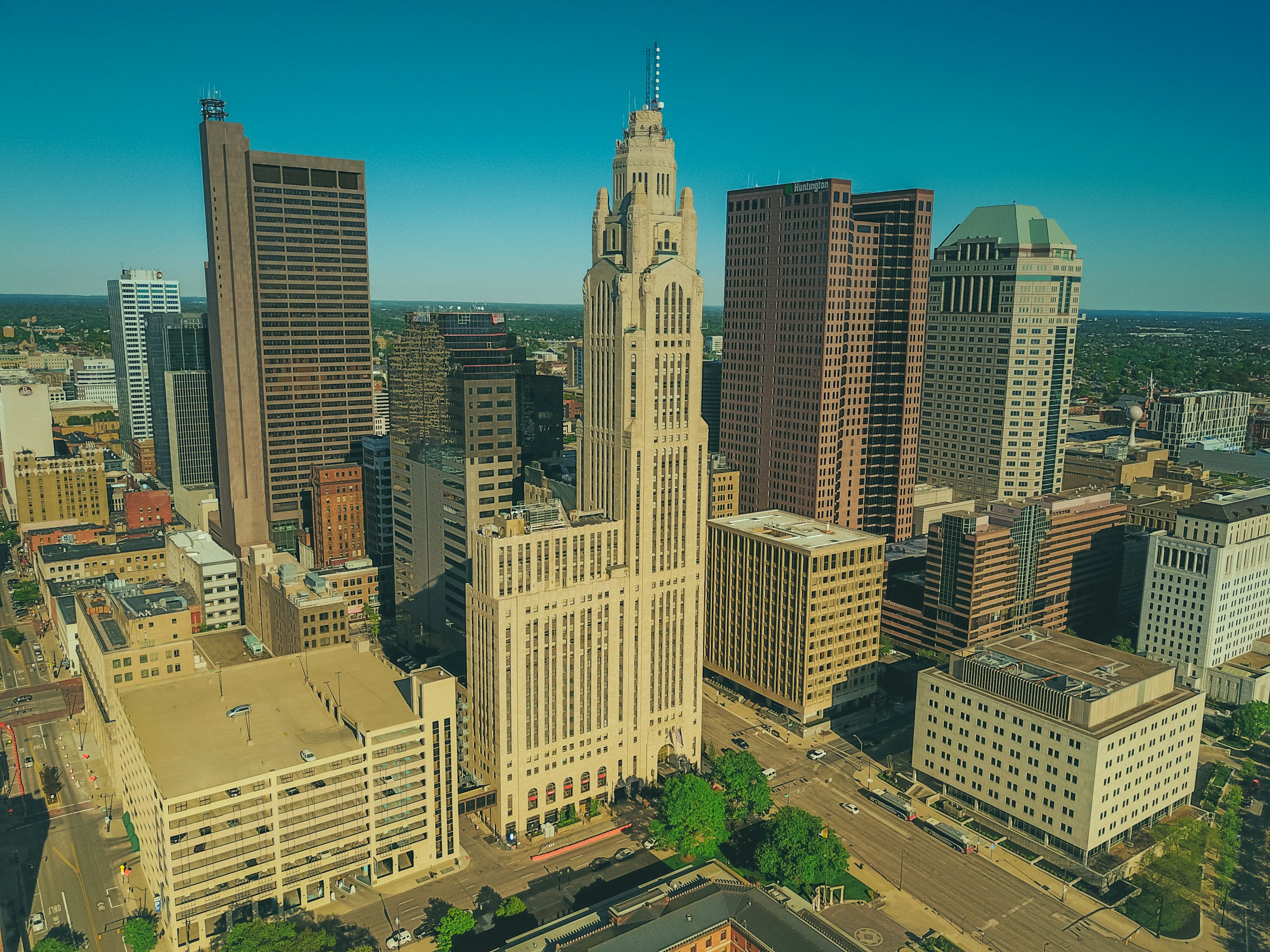
Why is Columbus, Ohio seeing so much industrial and data-center construction activity?
Columbus sits at the center of one of the country’s more closely watched industrial growth stories. The New Albany corridor, part of what local officials call the “Silicon Heartland,” has drawn large data-center and advanced-manufacturing investment, and the broader Columbus industrial market has absorbed that demand alongside ordinary logistics and distribution growth.[2] The market-level numbers back up the anecdotal story: 5.2% vacancy, down 270 basis points from a year earlier, alongside 9.0 million square feet still under construction — a pipeline large enough to matter, but a vacancy rate tight enough that the market has been absorbing new space rather than accumulating empty buildings.[1]
Quarterly net absorption of 1.9 million square feet, with 5.5 million square feet absorbed year-to-date and 2.7 million square feet delivered in a single quarter — the market’s biggest quarterly completion total since Q2 2023 — describes a market where new buildings are finding tenants close behind delivery, not sitting vacant while developers wait.[1] Rent growth of 9.7% year-over-year to $6.76 per square foot is consistent with that same read: landlords are pricing new, well-located industrial space with real conviction.[1]
How does a ground-up construction loan actually work?
A construction loan funds the build in stages — draws — released as defined phases of work are completed and verified, typically through inspections tied to a construction schedule. The loan does not advance the full budget at closing; it reimburses completed, inspected work, which means the developer or general contractor needs working capital or payment terms that tolerate being paid after milestones rather than before them. This is the same underlying mechanic used on residential rehab draws, scaled to a commercial or industrial project’s size and complexity.
Most construction loans also carry an interest reserve, funded at closing, that covers debt service during the build period when the property is not yet generating income. Sizing that reserve to the realistic construction timeline — not the optimistic one — is one of the most consequential decisions in structuring the deal, since a reserve that runs out before the building is generating cash flow leaves the developer funding debt service directly at the worst possible moment.
What is a construction-to-takeout structure, and why does it matter for an Ohio industrial developer?
The construction loan is only the first half of the financing story. The “takeout” is the permanent or longer-term bridge financing that repays the construction loan once the building is complete and either leased or generating enough in-place performance to qualify for stabilized debt. A developer should have a credible view of that takeout — a target lease-up timeline, a realistic stabilized rent, and an understanding of which capital sources will actually underwrite the finished asset — before breaking ground, not after the building is topped out.
Spec construction vs. build-to-suit: how does financing differ in the Columbus market?
| Factor | Spec (speculative) construction | Build-to-suit |
|---|---|---|
| Leasing risk at closing | Unleased at construction start; developer bets on market absorption | Often pre-leased or pre-committed to a named tenant before construction begins |
| Underwriting basis | Market comparables, absorption trends, and sponsor track record | Tenant credit quality and lease terms carry significant underwriting weight |
| Where Columbus fits | 5.2% vacancy and strong absorption support spec development in well-located submarkets[1] | Data-center and advanced-manufacturing projects in the New Albany corridor are frequently build-to-suit or anchor-driven[2] |
| Takeout path | Depends on achieving stabilized occupancy at a market rent | Often more straightforward once the tenant lease is in place and the building delivers |
What do lenders look for before funding a Columbus-area construction loan?
A complete set of plans and permits, a fixed-price or guaranteed-maximum-price construction contract with a qualified general contractor, a realistic draw schedule, an interest reserve sized to the actual construction timeline, and — critically — a credible takeout plan. Sponsor experience with projects of similar size and scope matters as well; a first-time developer building a large spec industrial building faces a different underwriting conversation than a repeat sponsor with a track record of on-time, on-budget deliveries in the same market.
What typically slows down or derails an industrial construction deal in Ohio?
- Underestimating entitlement and utility timelines. Large industrial and data-center sites often need significant power and water infrastructure work that can take longer to schedule than the building itself.
- A draw schedule that doesn’t match the actual construction sequence. Misaligned draws create cash-flow gaps for the general contractor mid-project.
- An interest reserve sized for the plan, not the delay. Weather, supply-chain timing, and inspection scheduling routinely push commercial construction past its original schedule.
- No committed takeout conversation before the building tops out. Waiting until delivery to start talking to permanent or bridge-to-perm lenders leaves the sponsor negotiating from a weaker position.
How does site selection in the Columbus region affect financing?
Power availability is increasingly the gating factor for large industrial and data-center-adjacent projects in the New Albany corridor and surrounding submarkets — a site with confirmed utility capacity and a realistic interconnection timeline underwrites very differently than one where power delivery is still being negotiated with the utility. Lenders financing large industrial construction in this region are asking about power, water, and road-infrastructure timelines earlier in the process than they might have several years ago, because those inputs now drive the realistic construction schedule as much as the building itself does.
What is the difference between construction financing and permanent takeout financing for an Ohio industrial project?
Construction financing carries real execution risk — the building doesn’t exist yet, or exists only partially, and the loan is sized against a budget and a plan rather than in-place income. Permanent or bridge-to-perm takeout financing, by contrast, is sized against the completed, leased building’s actual or highly probable cash flow. The two serve different points in a project’s life, use different underwriting criteria, and are often provided by entirely different types of capital sources — which is exactly why lining up the takeout conversation well before delivery matters so much.
Related reading
For draw-schedule mechanics in more depth, see how construction loan draw schedules work. Developers comparing residential build-to-rent construction to commercial industrial projects should see ground-up construction and build-to-rent financing in 2026, and for a comparable data-center-driven construction story in another state, see Texas data center and chip boom construction financing. For structuring the interest reserve itself, see interest reserves on construction and bridge loans. Bancaverse’s commercial financing program is outlined at our commercial real estate service page.
FAQs
What size projects does Bancaverse typically help finance in Ohio?
Deal sizes vary by project and sponsor, generally in the broader commercial bridge and construction range we work in elsewhere — each deal is evaluated on its own merits and current capital-partner appetite.
Is renovation or construction money advanced up front?
No, it is reimbursed through inspected draws tied to completed work, similar to a residential rehab loan but scaled to commercial project complexity.
Do I need a signed tenant lease to get a construction loan?
Not necessarily for a spec deal in a strong-demand market like Columbus industrial, though a signed lease or pre-commitment generally makes underwriting more straightforward and can improve loan terms.
What happens if construction runs past the loan term?
Extension options are typically available but usually come with performance conditions, a fee, or both — understand these terms before closing, not after you need them.
How does the takeout loan get arranged?
Ideally the sponsor is already in conversation with permanent or bridge-to-perm lenders well before the building delivers, using projected stabilized performance to line up takeout terms in advance rather than scrambling at completion.
Does Ohio’s data-center boom affect financing availability for other industrial projects?
It has drawn significant capital and construction activity to the broader Columbus region, which has generally supported market fundamentals — tight vacancy and strong absorption — that benefit industrial development beyond data centers specifically.
Is spec industrial construction riskier than build-to-suit in the current Columbus market?
It carries more leasing risk by definition, since the building starts without a committed tenant, but Columbus’s current vacancy and absorption trend has made well-located spec projects considerably more financeable than they were during periods of heavier new supply. Submarket selection still matters more than the metro-wide average.
Does Bancaverse fund these projects directly?
No. Bancaverse is a brokerage. We take one submission and match it to capital partners whose construction and takeout programs fit the project.
References
[1] CBRE, Columbus Industrial Figures, Q2 2026: cbre.com/insights/figures/columbus-industrial-figures-q2-2026
[2] City of New Albany, Ohio, Silicon Heartland economic development initiative: siliconheartland.newalbanyohio.org
Loan availability depends on property location, licensing, lender criteria, and applicable regulations. Bancaverse is a brokerage — we match borrowers with capital partners and do not lend. Educational information only; not an offer of credit, investment advice, or a commitment to lend.