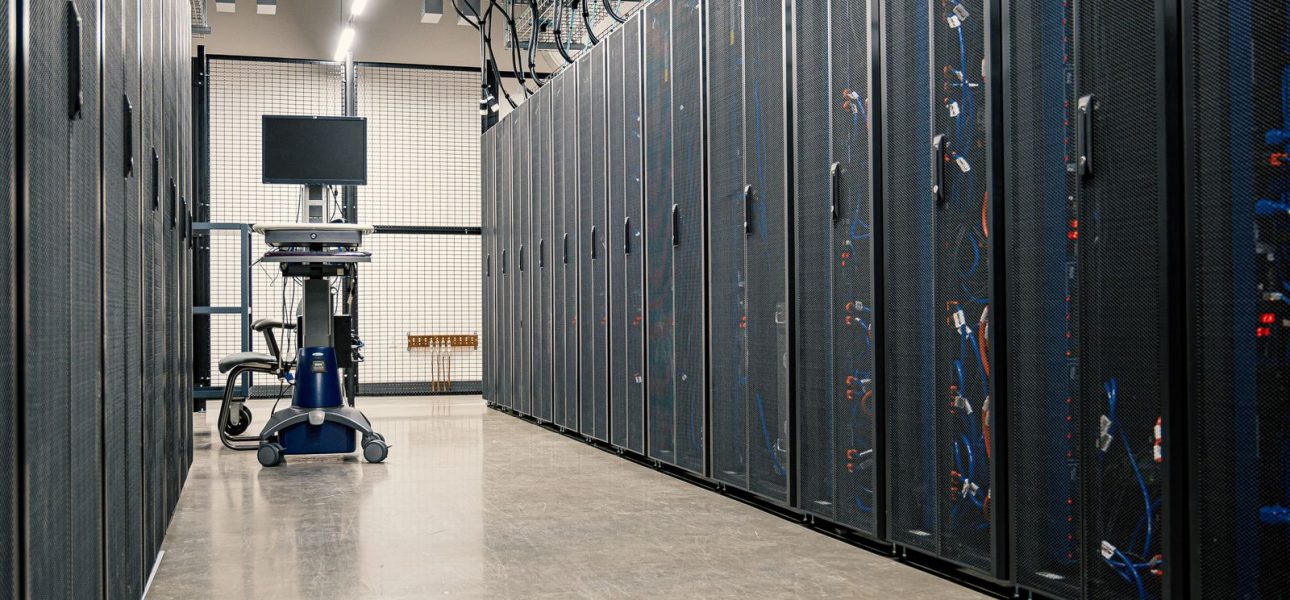
Texas leads the United States in commercial construction spending at nearly 90 billion dollars annually, more than double any other state. A disproportionate share of that spending is going into data center development. The Austin to San Antonio corridor alone now has 7,823 megawatts of planned data center capacity, compared to just 1,154 megawatts currently operating. Vacancy in existing Texas data centers is virtually zero. More than 70 data center projects are being tracked between Temple and San Antonio, with 96 percent of the 615 megawatts currently under construction already pre-leased before it opens. This is not a speculative buildout. It is a supply-constrained, demand-confirmed infrastructure boom that is creating a specific and largely overlooked real estate investment opportunity in the land, workforce housing, and commercial services that surround these facilities.
The data center investment opportunity itself is largely inaccessible to individual real estate investors. These facilities require hundreds of millions to billions of dollars in infrastructure investment, dedicated power agreements, and specialized construction expertise that is concentrated in a small number of specialized developers. What is accessible, and what most investors have not yet fully priced into their acquisition strategies, is the secondary real estate demand that data center development creates in the surrounding geography. Understanding the specific nature of that secondary demand, and where it is concentrating most intensively, is the analytical work that produces the next generation of Texas commercial real estate investment theses.
The Land Opportunity: Data Centers Are Repricing Adjacent Parcels
When a data center developer acquires land at a significant premium to prior agricultural or light industrial use, the repricing effect extends to adjacent parcels that are no longer competing for the same use category. A data center that pays 15 to 25 dollars per square foot for a 200-acre site in Williamson County resets land pricing benchmarks for the entire surrounding area, because the acquisition demonstrates that the corridor has attracted institutional capital at a scale that validates the infrastructure and location thesis. Land adjacent to announced data center sites that has not yet been repriced by institutional buyers but benefits from the same infrastructure characteristics represents an anticipatory acquisition opportunity.
The specific characteristics that make land valuable for data center development, including reliable power access, fiber connectivity, adequate water supply for cooling, and proximity to skilled labor, also make it valuable for the workforce housing, light industrial, and neighborhood retail that serves the data center workforce. Identifying parcels with these characteristics that are within the secondary influence radius of announced data center campuses and acquiring them before institutional demand fully reprices the land is a strategy that requires speed, local market knowledge, and private bridge financing that can close on land acquisitions quickly without the appraisal delays that characterize conventional land lending.
The Williamson County data center corridor provides a concrete illustration of this dynamic. According to a Texas A&M Real Estate Research Center analysis, the marquee data center projects in Williamson County have already reshaped regional land markets. The Austin to San Antonio corridor now has so much planned capacity that the surrounding communities are experiencing the same infrastructure-driven land price appreciation that accompanied the early buildout of semiconductor fabrication plants and logistics campuses in prior cycles. Investors who identify the next corridor where data center concentration is building before it reaches the Williamson County level of institutional attention will capture the repricing at a fraction of the cost.
Workforce Housing: The Most Immediate Data Center Adjacent Opportunity
Data center construction is labor-intensive at extraordinary scale. A single major data center campus employs thousands of construction workers during the build phase and hundreds of permanent technicians, engineers, and support staff after completion. These workers need housing, and they need it in the markets where the facilities are being built, which are often suburban or exurban communities where the existing workforce housing stock is insufficient for the demand that large-scale construction activity creates.
The workforce housing opportunity adjacent to Texas data center buildouts is particularly compelling in markets like Abilene, where the Stargate AI campus is planned at a scale that will dwarf the existing workforce housing supply; in Shackelford County, where Vantage’s 1.4 gigawatt Frontier campus is under development; and in the Hutto and Georgetown area of Williamson County, where the concentration of data center investment is already creating construction workforce housing demand that the existing apartment supply cannot fully satisfy. Multifamily development or value add acquisition in these markets, timed to the construction workforce arrival and designed to serve the permanent employment base as the facilities transition to operations, represents a disciplined application of the same anticipation strategy that works in the corporate relocation multifamily context.
The financing for workforce housing adjacent to data center development is straightforward: private bridge lending funds the acquisition and renovation of existing stock or the ground-up development of new construction, with the stabilization event triggered by the employment ramp at the adjacent facility. The underwriting question for lenders is whether the demand materializes on the projected timeline, which requires an analysis of the data center construction schedule and the historical employment patterns at comparable facilities. Lenders who have done this analysis before and have a framework for underwriting employment-driven workforce housing demand can move faster and with more confidence than lenders who are encountering this deal type for the first time.
Neighborhood Retail: The Downstream Commercial Opportunity
Beyond workforce housing, the data center buildout is creating demand for the neighborhood-serving commercial real estate infrastructure that supports a growing resident population. Grocery stores, medical offices, restaurants, dry cleaners, childcare facilities, and the full range of daily service businesses that are required when a community grows from 15,000 to 50,000 residents do not materialize automatically. They require commercial real estate investment in the form of retail pad sites, strip centers, and mixed-use development that anticipates the population growth and is in place to serve demand when it arrives.
Retail vacancy in the Austin and San Antonio markets, including their suburban corridors, runs between 3 and 5 percent, which is among the tightest levels in the country. In the specific submarkets where data center development is concentrating, the retail infrastructure is even more undersupplied relative to projected population. Neighborhood-serving retail development in these corridors, anchored by necessity-based tenants like grocers, pharmacies, and medical providers, represents a compelling ground-up development or value add repositioning opportunity that is directly supported by the employment and population growth that data center investment is driving.
The financing for retail development in Texas data center corridors follows the same private bridge lending framework applicable to other commercial real estate product types, with some specific considerations for retail tenanting and stabilization timelines. Ground-up retail construction typically requires 18 to 24 months from permit to opening, which aligns well with the construction timeline for the adjacent data center facilities and the employment ramp that drives retail demand. Borrowers who can demonstrate a tenanting plan, an understanding of the demand drivers, and a credible construction execution program will find active lender participation from the private lenders in the Bancaverse network who have experience with Texas commercial development.
How to Underwrite Adjacent Real Estate Deals in Texas Data Center Corridors
Underwriting real estate deals adjacent to Texas data center development requires a different analytical framework than underwriting conventional multifamily or commercial acquisitions. The demand drivers are institutional infrastructure commitments rather than organic population growth, which means the demand can be larger and faster-arriving than any residential demographic analysis would suggest, but also more concentrated in time and potentially less durable if the infrastructure project is delayed or scaled back. The underwriting process needs to account for both the upside of infrastructure-driven demand and the scenarios where development timelines slip or employment ramps more slowly than projected.
The most defensible underwriting approach for data center adjacent real estate is to underwrite the deal against the demand that already exists in the community independent of the data center development, treat the data center demand as upside that improves the return but is not required to achieve a minimum acceptable return, and structure the financing term to accommodate a range of demand arrival timing scenarios. A workforce housing deal in a Williamson County community that has 8,000 existing residents and stable employment in its own right is a fundamentally different risk profile than the same deal in a community of 500 people whose entire rationale is predicated on a data center project that has been announced but not yet funded. Both may be worth pursuing, but they require different capital structures, different loan terms, and different exit strategy preparation.
The lenders in the Bancaverse network who are active in Texas data center corridor deals have developed underwriting frameworks that account for these demand timing considerations. They look for deals with a credible base case that does not require the full data center demand realization to generate an acceptable return, with the data center demand creating the upside scenario that produces the compelling return. That framing is also the most honest way to present these deals, because it acknowledges the execution risk inherent in all construction-adjacent real estate while making a credible case for the return potential that the infrastructure buildout creates.
The Power and Water Infrastructure as a Location Intelligence Signal
One of the most reliable signals of where data center development is heading before public announcements are made is the power and water infrastructure investment being made by utilities and municipalities. ERCOT capacity expansion projects, transmission line construction, and the permitting of new substations are public record and provide a geographic indicator of where large-scale electricity consumers are planning to locate. Water treatment and distribution infrastructure investment similarly signals where municipalities are preparing for large-scale demand that would not come from residential growth alone.
Investors who track infrastructure permitting and utility investment in Texas have a leading indicator that precedes the public data center announcement by 12 to 24 months in many cases. A new 345-kilovolt transmission line being permitted from Pflugerville to Taylor is a signal that the Taylor corridor is being prepared for data center-scale electricity consumption. A water treatment plant expansion in a rural county that has limited existing population is a signal that municipal planning is anticipating large-scale industrial or commercial development. These signals are available to anyone who accesses the public records, but very few real estate investors are systematically monitoring them as location intelligence inputs.
Building this intelligence into a regular research practice, combined with the ability to move quickly on land and real estate acquisitions when the signals point to a specific corridor, is the operational discipline that converts the data center adjacent opportunity from a general thesis into specific executable investments. Private bridge lending is the capital instrument that enables speed, and the investors who have that financing relationship established before they need it are the ones who can act on infrastructure signals within weeks rather than months. The Texas data center buildout is not a single event. It is the opening chapter of a multi-decade infrastructure investment cycle that will reshape the commercial real estate geography of the state in ways that are still early in their development. The adjacent real estate opportunities are real, they are currently underpriced relative to the demand they will eventually attract, and the private capital required to pursue them is available to borrowers who present their deals with the analytical rigor and market knowledge the opportunity deserves. The investors who build the intelligence infrastructure to track infrastructure investment signals and move capital quickly when those signals appear will find that the Texas data center adjacent opportunity keeps delivering for years beyond the current announcement cycle, because the buildout is just beginning and the secondary demand it creates extends well beyond the timeline of any single facility. Data center adjacent real estate is the definition of infrastructure-anchored demand, and infrastructure-anchored demand is the most durable form of commercial real estate return available in any market cycle. That is the durable thesis. The foundation is sound.
Get Multiple Offers on Your Deal
Texas Data Center Real Estate Investment: Key Takeaways
When it comes to Texas data center real estate investment, a few fundamentals drive the outcome. However, markets shift, so timing, leverage, and structure all matter. As a result, lining up the right financing early is often the difference between a deal that closes and one that stalls.
Bancaverse helps real estate investors with Texas data center real estate investment — we structure the scenario and match it to the private lenders most likely to fund it. Explore our commercial real estate financing and the full loan products overview, or browse our FAQs. Ready to move? Get matched with a lender →