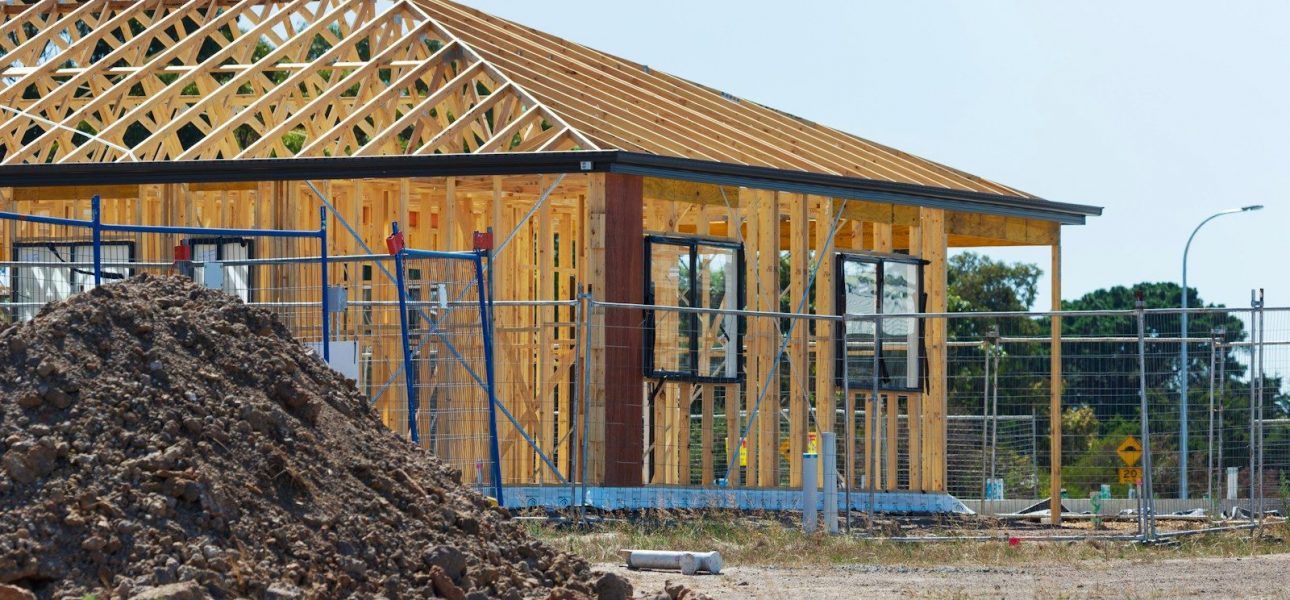
Two investors submit near-identical ground-up construction requests. One gets a term sheet covering 80% of the project; the other is asked to fund 40% out of pocket. The difference usually is not credit or market — it is which ratio the lender used to size the loan, and how the numbers behind it were built. If you understand loan-to-cost versus loan-to-value before you apply, you stop being surprised by the equity check.
What is the difference between loan-to-cost and loan-to-value?
Both are leverage ratios, but they divide the loan by a different denominator, and that denominator changes everything.
Loan-to-cost (LTC) divides the loan amount by the total project cost: the purchase price or land basis, plus hard costs (materials and labor) and soft costs (permits, architecture, engineering, financing costs, contingency). It answers a builder’s question: of everything it takes to complete this project, how much is the lender covering?
Loan-to-value (LTV) divides the loan by the property’s appraised value — typically the “as-is” value today. It answers a different question: if this deal goes sideways and the lender has to sell, how much cushion sits between the loan and the collateral?
A third ratio, loan-to-after-repair-value (LTARV) or loan-to-completed-value, divides the loan by the appraiser’s projected value after the work is finished. It is the bridge between cost and value on a transitional deal, and most construction and value-add programs quietly test all three at once, then lend to whichever produces the lowest dollar figure.
How do construction and value-add lenders actually size a deal?
The mistake investors make is assuming one ratio wins. In practice, a disciplined lender runs the deal through every constraint and takes the tightest one. Picture a ground-up project with $1,000,000 in total cost and a $1,300,000 appraised completed value:
- 85% LTC on $1,000,000 cost → $850,000
- 70% LTARV on $1,300,000 finished value → $910,000
The lender offers the lower number: $850,000. LTC is the binding constraint, so the investor funds the remaining $150,000 plus closing costs as equity. Flip the assumptions — a modest cost basis but a strong appraised value — and LTV or LTARV becomes the ceiling instead. This is why two similar-looking deals get very different term sheets: the same program applied different binding constraints because the underlying cost and value numbers differed.
On value-add multifamily and commercial repositioning, lenders layer in a fourth test: projected debt service coverage at stabilization. A deal can clear every leverage ratio and still get cut back because the finished rent roll won’t service the debt at a comfortable margin. We cover that sizing logic in more depth in our guide to multifamily financing.
What loan-to-cost and loan-to-value ranges are typical in 2026?
Ranges vary by asset class, sponsor experience, and market, but the illustrative bands below show how the ratios usually stack up across program categories:
| Program category | Governing ratio | Illustrative max leverage |
|---|---|---|
| Ground-up construction program | LTC (with LTARV cap) | ~75–85% LTC / ~65–70% LTARV |
| Heavy value-add bridge program | LTC + LTARV | ~80% LTC / ~70% LTARV |
| Light value-add / stabilized bridge | LTV (as-is) | ~65–75% LTV |
| Commercial repositioning program | Lowest of LTC / LTV / debt yield | ~65–75% LTC |
Estimates only — educational, not an offer of credit, and not financial, legal, or tax advice. Business-purpose, non-owner-occupied investment financing only. Bancaverse is a broker, not a lender (Bancaverse LLC).
Notice the pattern: the more speculative the business plan, the more the lender leans on cost rather than an unproven future value. A ground-up program will happily quote a high LTC because it can inspect exactly where the money goes — but it caps the completed-value exposure so it is never over its skis on an appraisal it cannot yet verify.
What kills a construction or value-add loan in underwriting?
Leverage ratios set the ceiling; execution details decide whether you reach it. The recurring deal-killers we see:
- A thin or padded budget. LTC is only as trustworthy as the cost schedule behind it. Missing contingency, absent soft costs, or a hard-cost line that doesn’t match local pricing gets the whole budget re-underwritten — usually downward, which shrinks your loan.
- No verifiable land basis. If you’re contributing land at an inflated “market” value rather than your real acquisition cost, expect the lender to use the lower figure, raising your effective equity.
- An appraisal that won’t support the completed value. When the LTARV appraisal comes in soft, the LTARV cap — not LTC — becomes binding and the loan drops.
- A draw schedule the sponsor can’t cash-flow. Construction funds reimburse work already completed. Underestimating how much you must carry between draws stalls projects mid-build.
- Debt service that doesn’t pencil at exit. On value-add, if stabilized income won’t cover the take-out loan, the deal fails on coverage no matter how clean the leverage looks.
A broker’s job is to catch these before a lender does. When we represent a borrower, we pressure-test the budget and the value story first, then take a tightened package to multiple programs at once — so you can get up to five competing offers instead of one lender’s opening position. See how the bridge and transitional loan process works end to end.
Why does loan-to-cost matter more than loan-to-value on a ground-up deal?
Because on a bare lot there is no stabilized value to lend against — only a plan and a budget. LTV on today’s “as-is” value would produce a tiny loan (raw land is worth a fraction of the finished project). So construction lenders anchor to cost, release funds against verified progress, and hold the completed-value cap as a backstop. As the project stabilizes and a real, income-backed value emerges, the deal can refinance onto a value-based loan — a longer-term option sized on LTV and coverage rather than cost. Understanding that hand-off from cost-based to value-based leverage is the core of financing any build or heavy reposition.
Which markets does Bancaverse serve?
Bancaverse arranges business-purpose investment financing across roughly 32 states, led by Texas (DFW, Houston, San Antonio, Austin), Florida (Tampa, Orlando, Jacksonville, Miami), Georgia (Atlanta), the Carolinas (Charlotte, Raleigh, Greenville, Charleston, Columbia), and Colorado (Denver). If your project sits outside a core market, the underwriting logic above still applies — the ratios don’t change with the ZIP code.
What it means for you
Before you sign a term sheet, ask which ratio is binding your loan and what cost and value figures the lender used to get there. If LTC governs, sharpen your budget; if LTARV governs, defend your completed-value story; if LTV governs, the appraisal is your battleground. Get that diagnosis right and you walk in with the correct equity ready — and you negotiate from data instead of hope. Bancaverse represents the borrower: we build the package, run it to multiple private and institutional programs, and bring back competing offers. Start your application →
Estimates only — educational, not an offer of credit, and not financial, legal, or tax advice. Business-purpose, non-owner-occupied investment financing only. Bancaverse is a broker, not a lender (Bancaverse LLC).
Frequently asked questions
Is loan-to-cost or loan-to-value better for investors?
Neither is universally better — they measure different things. On new construction and heavy value-add, LTC usually produces the larger loan because there’s no stabilized value yet; on stabilized property, LTV governs. Most construction and bridge programs test both and lend to the lower dollar amount.
What is a typical loan-to-cost ratio on ground-up construction?
Illustratively, ground-up programs may reach roughly 75–85% LTC, usually paired with a completed-value (LTARV) cap around 65–70%. Actual leverage depends on sponsor experience, asset type, and market. Estimates only — educational, not an offer of credit, and not financial, legal, or tax advice. Business-purpose, non-owner-occupied investment financing only. Bancaverse is a broker, not a lender (Bancaverse LLC).
What is the difference between LTARV and LTC?
LTC divides the loan by total project cost; LTARV divides it by the appraiser’s projected value after the work is complete. Cost is what you spend; after-repair value is what the finished asset is worth. Lenders typically apply both as separate ceilings.
Why did my lender fund less than the LTC they quoted?
Usually because a different constraint became binding — a soft appraisal made the LTARV cap control, or the cost budget was re-underwritten downward. The quoted LTC is a ceiling, not a guarantee.
Do these loans work for a primary residence?
No. Bancaverse arranges business-purpose, non-owner-occupied investment financing only. Owner-occupied and consumer mortgages are outside our scope.
Does using a broker change how my deal is sized?
A broker doesn’t change a lender’s formulas, but it changes your leverage. By presenting a tightened, well-documented package to several programs at once, Bancaverse helps investors surface up to five competing offers — which often improves both the leverage and the pricing you’re ultimately offered.