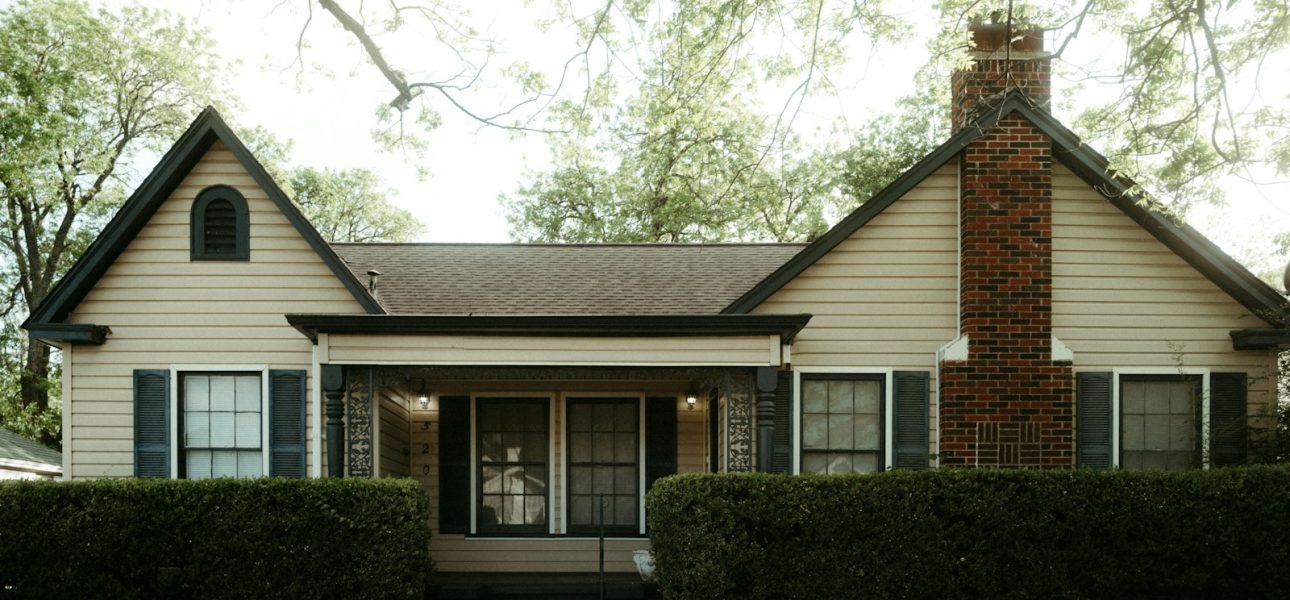
If you bought a rental with cash, you can usually pull money back out with a DSCR cash-out refinance, a business-purpose loan that qualifies the property on its rent instead of your personal income. A cash out refinance on rental property puts a new first-lien loan on the asset and hands you the difference in cash. The two things that decide how fast you can do it are seasoning (how long you have owned the property) and how the lender treats your title and your rent.
Here is how it works, what is different from conventional rules, and what to get in order before you ask anybody for numbers.
Why investors do a cash out refinance on rental property they own free and clear
Paying cash is clean, and a cash out refinance on rental property is how most people undo the downside. No payment, no lender, nothing to explain. It is also a lot of capital sitting in one building doing one job. Most investors who go all-cash and then come back to refinance are trying to do one of a few things:
- Recycle the money into the next purchase, so one pile of cash buys several properties over time.
- Fund a down payment on another rental without liquidating other assets.
- Pay for renovations or a lease-up on the property they already own.
- Rebuild liquidity after a big purchase, so they are not holding a thin cash reserve on a thick property.
The refinance does not change who owns the building. It changes how much of your money is stuck in it. And because the loan is made to you as a business owner, the underwriting looks at the property’s income, not at your W-2 or tax returns.
Delayed financing vs. a standard cash-out refinance: the seasoning question
Seasoning just means how long you have held the property before you refinance it. This is where most cash buyers get confused, because there are two different worlds and people blend them together.
The conventional rule: Fannie Mae delayed financing
Fannie Mae, one of the two big conventional mortgage investors, has a specific carve-out for cash buyers. It is called the delayed financing exception, and it lives in the Fannie Mae Selling Guide, section B2-1.3-03 on cash-out refinance transactions. Per the guide, the property must have been purchased within the past six months, measured from the purchase date to the disbursement date of the new loan. The original purchase has to be documented with a settlement statement showing no mortgage financing was used, and it has to be an arm’s-length deal. The new loan generally can’t exceed what you actually put into the purchase, plus financed closing costs and prepaid items, and it is still limited by the program’s maximum loan-to-value ratio on the current appraised value. You also have to document where the purchase money came from.
Outside that exception, the guide’s standard cash-out rules apply. If an existing first mortgage is being paid off, it must be at least 12 months old at the time of the refinance, and for a standard cash-out at least one borrower has to have been on title for six months. You can read the full language yourself on the Fannie Mae Selling Guide page for cash-out refinance transactions (B2-1.3-03).
Why do I bring up a conventional rule in an article about DSCR? Two reasons. It is the benchmark that most lenders, appraisers and title companies have in their heads, so you will hear its language on calls. And it is a good picture of what “cash purchase, then refinance” looks like when it is done by the book: a paper trail showing the cash in, the cash out, and no loan in between.
The business-purpose rule: DSCR programs set their own seasoning
Here is the part people miss. A debt service coverage ratio (DSCR) loan is a business-purpose investor loan, and the private capital partners behind these programs write their own guidelines. Fannie Mae’s delayed financing rules do not govern them. Some programs will refinance a cash purchase quickly, some want a few months of ownership, some want a longer track record before they will lend against appraised value instead of your purchase price. There is no single national number.
What does tend to be consistent is the logic. Lenders get nervous about a fast flip in value on a property that was just bought, so recent purchases are often limited to a cost basis (what you paid plus documented improvements) until the property has been held a while. After that, the appraisal is usually what drives the loan amount. Exact timing is program by program, so confirm it before you plan around it.
| Topic | Fannie Mae conventional (per Selling Guide B2-1.3-03) | DSCR / business-purpose programs |
|---|---|---|
| Who sets the rules | Fannie Mae, published in the Selling Guide | Each private capital partner sets its own guidelines |
| Cash-purchase exception | Delayed financing: purchase within the past six months, documented with a settlement statement showing no mortgage | Varies by program; many allow a cash-out soon after purchase, often tied to your cost basis early on |
| Standard cash-out seasoning | Existing first mortgage at least 12 months old; at least one borrower on title six months | Varies; ask for the exact ownership period before you apply |
| Cash-out limit on a recent cash purchase | Capped at your documented initial investment plus certain closing costs | Often limited to purchase price plus documented improvements until seasoning is met |
| How you qualify | Personal income and debt-to-income ratio | The property’s rent against its housing costs |
| Title | Original purchase may have been by an individual, certain trusts, or an LLC or partnership you fully own | Usually an LLC or other entity is fine; confirm per program |
One note on that table. The right-hand column is a general description of how the market behaves, not a quote of anyone’s guidelines, because there is no published universal DSCR rulebook. The left column comes straight from the Fannie Mae guide.
How DSCR is calculated on your rental
This is the whole game on a DSCR cash-out refinance. The formula is simple: monthly rent divided by the monthly cost of owning the property.
DSCR = monthly rent ÷ PITIA
PITIA stands for principal, interest, taxes, insurance and association dues. If the property is in an HOA or condo association, the dues go in. If it is not, that piece drops out. A result above 1.0 means the rent covers the payment on paper. Below 1.0 means it does not. Lenders set their own minimum, and some programs go below 1.0 with adjustments, but I am not going to throw numbers at you here because it moves by program and by deal.
Now the part cash buyers find odd. Your all-cash property has no mortgage payment today. The lender calculates the ratio using the payment on the new loan, the one you are asking for. That creates a loop worth understanding:
- A bigger loan means a bigger payment, which pushes the ratio down.
- Taxes and insurance count even though you currently pay them out of pocket, so they are part of the denominator no matter what.
- High-tax and high-insurance areas squeeze the ratio faster, because those costs are fixed regardless of how much you borrow.
The practical takeaway is that rent, not your net worth, sets the ceiling on how much cash you can pull out. If the rent is thin relative to the property’s carrying costs, the loan size that fits the ratio might be smaller than you hoped, even if the appraisal is strong. That is worth knowing before you spend money on an appraisal.
If you want to see how this plays out in a specific state, our guide to DSCR cash-out refinancing for Texas rental investors goes through taxes and insurance in that market. And if this is your first rental deal, this walkthrough of DSCR loans for first-time investors covers the basics from the beginning.
Title: LLC or personal name?
Lots of cash buyers close in their personal name because it is simple, then later move the property into an LLC for liability reasons. Others buy in the LLC from day one. Both can work for a cash-out refinance, but the title situation affects the process.
If the property is in an LLC
Business-purpose lenders are generally comfortable lending to a limited liability company (LLC), because the loan is for investment, not a primary residence. Expect them to ask for entity documents: articles of organization, the operating agreement, an EIN letter, and a good standing certificate. They will also want to see who owns the entity and who has authority to sign. Many programs require a personal guaranty from the owners even when the borrower is the LLC, so don’t assume the entity wall means no personal signature.
If the property is in your personal name
You can often refinance in your own name, or transfer title to a new LLC at or before closing. The sequence matters. Transfers on a property with no loan are usually easy. Transfers while a refinance is in process can create title and insurance wrinkles, and some programs want the entity to hold title for a period before closing. Check with your title company and your insurance agent first, because the policy needs to name the correct insured party.
Entity structure and liability protection are your attorney’s and CPA’s call, not a broker’s. What a broker can tell you is how the lender will want the file to look: clean title, the borrower name matching the vesting, and insurance matching both. Mismatches are the number one cause of last-minute delays on closings like this.
The appraisal and the rent schedule
Two documents drive a DSCR cash-out refinance more than anything else: the appraisal and the rent number that goes with it.
The appraisal tells the lender what the property is worth today. On a cash-out, the loan amount is capped as a percentage of that value, and lenders usually keep leverage on cash-out lower than they would on a purchase. So appraised value sets one ceiling, and the DSCR sets another. The loan can only be as large as the smaller of the two.
For the rent, the appraiser typically completes a market rent analysis, often called a rent schedule, comparing your unit to similar rentals nearby. If the property is already leased, lenders generally also want the lease. When the lease and the market rent disagree, programs differ on which they use, and many go with the lower figure. If your tenant is paying well below market, that matters. If the unit is vacant, the market rent estimate usually drives the number, and some programs treat vacant units differently, so raise it early.
Short-term rentals add a layer. Programs that accept short-term rental income typically want a different kind of documentation, such as platform history or a market projection. If you run a vacation rental, read our piece on DSCR loans for short-term rentals in Tennessee to see how that income is usually handled.
How to prepare: what lenders look at
The cleaner your file, the faster this goes. Because the property was bought for cash, your paper trail is about three things: you own it free and clear, it makes rent, and you are who you say you are. Here is a checklist you can work through before you send a deal anywhere.
Documents to prepare
- Settlement statement or closing disclosure from your cash purchase, showing no mortgage financing was used.
- Deed and vesting information, so everyone agrees on exactly who owns the property.
- Entity documents if you hold title in an LLC: articles, operating agreement, EIN letter, good standing certificate.
- Government-issued ID for each guarantor.
- Current lease or leases, plus proof of rent payments if the lender asks (bank deposits are common).
- Proof of insurance on the property, with the right named insured and the right coverage type for a rental.
- Property tax bill, so the taxes in the ratio are real and not estimated.
- HOA or condo documents and dues if there is an association.
- Source-of-funds records for the original purchase if the property was bought recently. Bank statements covering the money that paid for it are the usual way to show it.
- Bank statements showing liquidity, because many programs want to see reserves after closing.
- Scope and receipts for improvements, if you spent money fixing the place up and want it counted.
- A short portfolio summary if you own other rentals, listing properties, rents and any existing loans.
What lenders look at
- Ownership and seasoning, meaning how long you have held title.
- Property type and condition. Single-family, small multifamily and condos all work, but each has its own quirks.
- Rent against carrying costs, the ratio we covered above.
- Appraised value against the loan amount.
- Your credit and liquidity. Business-purpose programs still look at the guarantor, even though they are not underwriting your paycheck.
- Condo and HOA health, where it applies. Condo rules can add extra review, and in Florida there are building-specific issues, which we cover in our Florida condo DSCR loan guide.
First lien only: no HELOCs, no second liens
Quick clarification, because it comes up. A DSCR cash-out refinance is a first-lien loan. The new loan sits in first position on the property. That fits your situation perfectly, since a property you bought with cash has nothing else against it.
What it is not: a home equity line of credit (HELOC) or a second mortgage. Those are subordinate liens, and this is not that product. If you are hoping to keep an existing loan in place and add a second one on top, that is a different request, and it is not something we handle. The structure here is one new first-position loan, paid out to you as cash at closing after any costs.
That also keeps your preparation straightforward. With nothing on the property, there is no payoff to coordinate, no prior lender to chase for a payoff letter, and no subordination to untangle. The title company searches the property, confirms it is clear, and records the new lien.
A simple order of operations
- Pin down the dates. Write down your purchase date, how the deal was funded, and when you plan to refinance.
- Gather the file. Use the checklist above. Missing documents are the most common reason timelines slip.
- Sort out title. Decide on LLC or personal name with your attorney and CPA, and finish any transfer before you start, not in the middle.
- Know your rent. Pull the lease, check it against market rent, and figure out the ratio roughly before you ask anyone for a quote.
- Compare proposals on structure. Look at seasoning rules, the cash-out limit on a recent purchase, prepayment terms, and what the appraisal has to support.
- Close and redeploy. Decide in advance where the cash goes. A refinance with no plan for the proceeds is just a payment you added.
How Bancaverse™ helps
Bancaverse™ is a private credit platform and brokerage for business-purpose mortgage lending. You send us the property, the purchase history and the rent, and we connect you with capital partners actively deploying on cash-out refinances like yours. Lenders compete for the deal, and an expert team negotiates terms on your behalf, including the seasoning question that trips up so many cash buyers. Loans start at $300K, with no upper limit.
We earn a brokerage fee at closing only, with no upfront fees. Our job is the capital side: structuring the request so it fits what the capital partner can actually do. We do not pick properties, and we are not realtors. If you are comparing a refinance to a different path entirely, say you would rather do it as part of a buy, rehab, rent, refinance and repeat strategy, our post on the rent-or-refinance decision for Houston landlords walks through that thinking.
Frequently asked questions
How soon after buying a rental with cash can I do a cash-out refinance?
It depends on the program. Under Fannie Mae’s conventional delayed financing exception, the purchase has to be within the past six months and the cash-out is capped at what you put into the deal. DSCR and other business-purpose programs set their own seasoning, so some will go quickly and some want a longer hold. Ask for the exact requirement up front.
Does Fannie Mae’s delayed financing rule apply to a DSCR loan?
No. Delayed financing is a Fannie Mae conventional rule published in Selling Guide section B2-1.3-03. DSCR loans are business-purpose products, and the capital partners behind them set their own seasoning and cash-out limits. The Fannie Mae rule is a useful reference point, not the governing standard.
How is DSCR calculated?
Divide the property’s monthly rent by its monthly principal, interest, taxes, insurance and association dues (PITIA). A result above 1.0 means rent covers the housing costs on paper. On a cash-out refinance, the payment used is the one on the new loan.
Can I refinance a rental held in an LLC?
Generally yes, since these are business-purpose loans. Expect to provide entity documents and, in many programs, a personal guaranty from the owners. Make sure the vesting on title, the borrower name and the insurance named insured all match.
Will the lender use the lease or the market rent?
Programs vary. The appraiser usually provides a market rent analysis, and if there is a signed lease, many lenders compare the two and use the lower figure. If the unit is vacant, market rent generally drives the calculation.
Can I use a HELOC or second mortgage instead?
Those are different products, and they are not what a DSCR cash-out refinance is. This is a single new first-lien loan on the property. Bancaverse™ does not arrange second liens or HELOCs.
How much cash can I actually take out?
It is limited by two things at once: the lender’s maximum loan against the appraised value, and the loan size that your rent can support under the DSCR test. You get the smaller of the two, minus closing costs. On a recently bought property, many programs also limit the loan to your cost basis until the seasoning period is met.
Ready to pull your money back out?
If you own a rental free and clear and want to put that equity to work, send us your deal and we will tell you how the capital looks for your specific property. Prefer to talk it through first? Talk to the team and bring your purchase date, your rent and your plan for the proceeds. This article is general information about business-purpose investor lending, not tax, legal or investment advice.