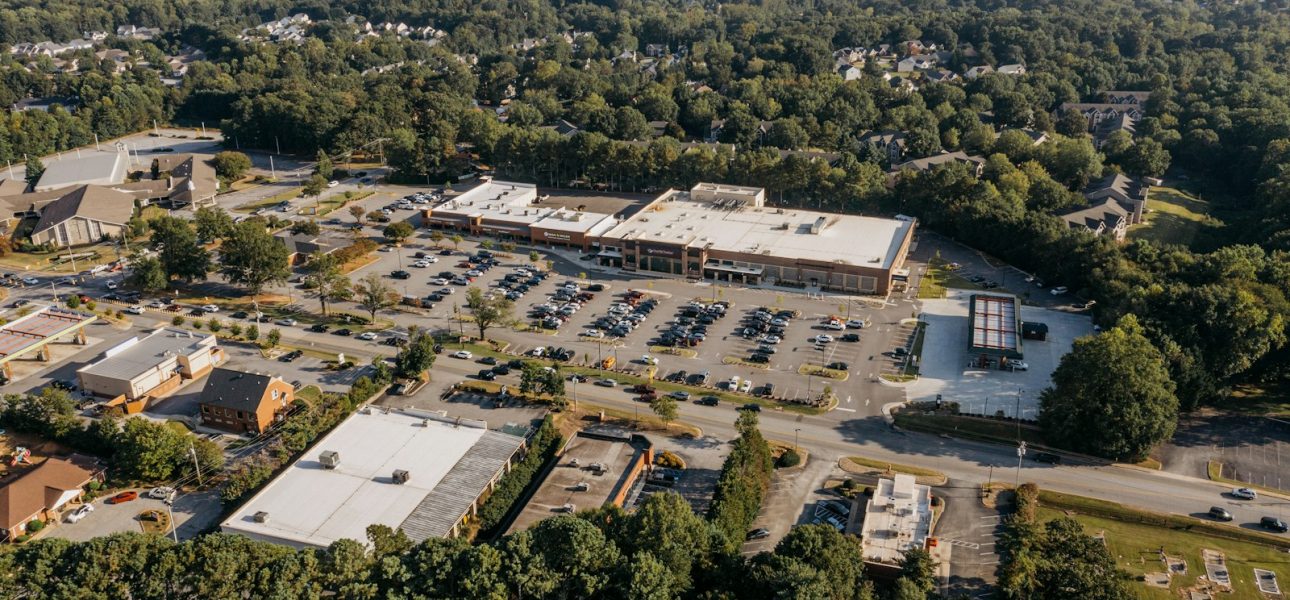
Quick answer: When a Georgia bank will not extend a retail or flex loan, a bridge loan can fund re-tenanting and carry the property to a refinance, but the borrower should move early because Georgia’s nonjudicial foreclosure process can move quickly. Banks reported tightening standards on every commercial real estate category in the Federal Reserve’s October 2026 survey, so a second financing path is worth building before maturity.[1]
Key takeaways
- The Federal Reserve’s October 2026 senior loan officer survey reports banks tightened lending standards on construction, nonfarm nonresidential and multifamily loans, and saw weaker demand in all three categories.[1]
- Georgia is a nonjudicial foreclosure state, and the statute calls for written notice to the debtor no later than 30 days before the proposed sale.[2]
- Bridge lenders underwrite the re-tenanting plan, so leasing evidence, tenant improvement budgets and reserves matter.
- A cooperative conversation with your current lender, in parallel with a bridge search, usually preserves the most options.
Why are Georgia retail and flex owners facing extension problems?
Retail centers and flex buildings often hit loan maturity with a partly vacant rent roll, a tenant rollover cluster or deferred capital needs. Banks reviewing those loans apply tighter underwriting than they did when the loans were made, and that can turn a routine extension into a negotiation or a decline.
The Federal Reserve’s October 2026 Senior Loan Officer Opinion Survey says banks tightened standards, on net, for all commercial real estate loan categories and reported weaker demand for all of them.[1] The survey is national and does not isolate Georgia or property type, but it describes the environment in which a Georgia owner is asking for an extension.
Bancaverse is a private credit platform and brokerage. We arrange commercial real estate loans through private lenders and do not lend from our own balance sheet. We do not quote rates or terms in articles.
What does a re-tenanting bridge loan actually fund?
A re-tenanting bridge is short-term financing used to pay off an existing loan or carry a property while you lease vacant space, fund tenant improvements and leasing commissions, and stabilize income. Lenders underwrite the business plan, not just current rent, so the file needs evidence that the plan is credible.
Typical components include payoff of the maturing loan, a holdback for tenant improvements and leasing costs, and an interest or operating reserve. Each lender structures these differently, so ask what is released upfront and what is released against signed leases.
Our Florida guide on mixed-use and retail bridge loans with TI and LC reserves explains how these holdbacks work in practice.
What should your leasing file include?
A lender evaluating a Georgia retail or flex bridge wants to see more than a vacancy rate. Build a package with a current rent roll, lease abstracts, expirations by year, a vacancy and prospect log, broker opinions of rent for vacant space and a tenant improvement budget by suite.
| Document | What it proves | Common gap |
|---|---|---|
| Rent roll and lease abstracts | In-place income and rollover risk | Missing option and termination rights |
| Leasing prospect log | Real demand for vacant space | No written proposals or letters of intent |
| TI and leasing cost budget | Capital needed to re-lease | Costs based on old bids |
| Operating statements | Expense levels and trends | Unexplained spikes in taxes or insurance |
| Sponsor financials | Ability to support the property | Contingent liabilities not disclosed |
How does the Georgia foreclosure clock work?
Georgia uses a power-of-sale process under the security deed, which is nonjudicial. The statute requires that notice of the initiation of foreclosure be given to the debtor in writing, by registered or certified mail or statutory overnight delivery, no later than 30 days before the date of the proposed sale.[2] Sales are generally held on the first Tuesday of the month after four consecutive weeks of notice in the county’s legal organ, according to a Thompson Hine summary of the process.[3]
Two cautions apply. The statute text we reviewed is the 2021 code, and the publisher notes a newer version exists, so confirm the current wording with Georgia counsel. And these are the minimum procedural mechanics, not a prediction of how a particular lender will behave.
The practical point is simple. Because the process is administrative rather than court-driven, a borrower who waits until a notice arrives has little time to arrange a payoff. Start the refinance search while you still have time to be selective. Our guide to Georgia commercial bridge loans and maturity workouts covers the negotiation side in more detail.
Facing a Georgia maturity or extension decline? Send us the property, the maturity date and your leasing plan and we will help you evaluate bridge options before the clock gets short. Schedule a call.
How do Atlanta and Savannah submarkets differ?
Metro Atlanta is a collection of submarkets, and retail strips in established suburbs behave differently from flex space near logistics corridors. Savannah’s industrial and port-adjacent flex has its own tenant base. We have not cited vacancy or rent statistics here, so gather current submarket data from local brokers before you build your pro forma.
What carries across all submarkets is the underwriting question: who is the next tenant, at what rent and after what build-out? If you can answer that with letters of intent and bids, your bridge request becomes much easier to evaluate. Our Atlanta investment property loans page gives broader market context.
How does a distressed-loan situation change the plan?
If a loan is in default, in special servicing or being marketed, your options widen but your timeline shortens. Payoff negotiations, discounted payoffs and consensual transfers are all possible in some situations, and each requires clear documentation and a lender willing to deal.
CMBS loans add another layer because decisions run through a servicer. Our Ohio article on CMBS special servicing and bridge financing explains the process, which is similar in Georgia.
What are the risks to underwrite honestly?
Re-tenanting plans fail for predictable reasons: leasing takes longer than planned, tenant improvement costs run over, or the permanent lender at the end wants more occupancy than you reach. Build a downside case where lease-up takes longer and costs are higher, and see whether your reserves still cover the carry.
Also consider tenant credit. A center anchored by a strong credit tenant is a different risk from one reliant on short-term local leases. Be candid with lenders about that mix, because they will find it in diligence.
How should you work with your current lender while exploring bridge options?
Keep your current lender informed. Ask what documentation they would need to consider an extension, whether a paydown or additional reserves would help, and what their timeline is. Running a bridge search in parallel does not signal weakness; it signals preparation.
Keep a written log of those conversations and ask for decisions in writing. If an extension is offered, compare its cost and conditions with a bridge payoff. If it is declined, you already have a backup in motion.
Frequently asked questions
How much notice does Georgia require before a foreclosure sale?
The statute we reviewed requires written notice to the debtor no later than 30 days before the proposed sale.[2] Confirm the current text and any loan-document requirements with Georgia counsel.
When are Georgia foreclosure sales held?
A published legal summary says sales occur on the first Tuesday of the month after four consecutive weeks of notice in the county legal organ.[3]
Can a bridge loan pay off my maturing bank loan?
Yes, a bridge loan can be structured to refinance an existing loan while funding re-leasing costs, subject to lender approval of the property and your business plan.
Does Bancaverse lend its own money?
No. Bancaverse is a brokerage and private credit platform that arranges loans through third-party lenders and does not use its own balance sheet.
What if my loan is already in default?
Contact counsel and a financing advisor right away. Options depend on the loan documents, the lender’s posture and the property, and timing is tight.
Do banks still lend on retail and flex properties?
Many do, but the Federal Reserve’s October 2026 survey reports tighter standards across commercial real estate categories, so terms and availability vary.[1]
Bancaverse can help you get private capital for your commercial real estate project.
References
- Board of Governors of the Federal Reserve System, The October 2026 Senior Loan Officer Opinion Survey on Bank Lending Practices, https://www.federalreserve.gov/data/sloos/sloos-202610.htm. Accessed November 16, 2026.
- Justia, O.C.G.A. section 44-14-162.2 (2021 Georgia Code), https://law.justia.com/codes/georgia/2021/title-44/chapter-14/article-7/part-1/section-44-14-162-2. A newer version exists; confirm with counsel.
- Thompson Hine, First Tuesday Foreclosure Advantage: Distressed Property in Georgia, https://www.thompsonhine.com/insights/first-tuesday-foreclosure-advantage-distressed-property-in-georgia/. Accessed November 16, 2026.
This article is educational and is not legal, tax or investment advice. Bancaverse arranges loans through third-party lenders and does not lend from its own balance sheet. No returns are promised or implied.