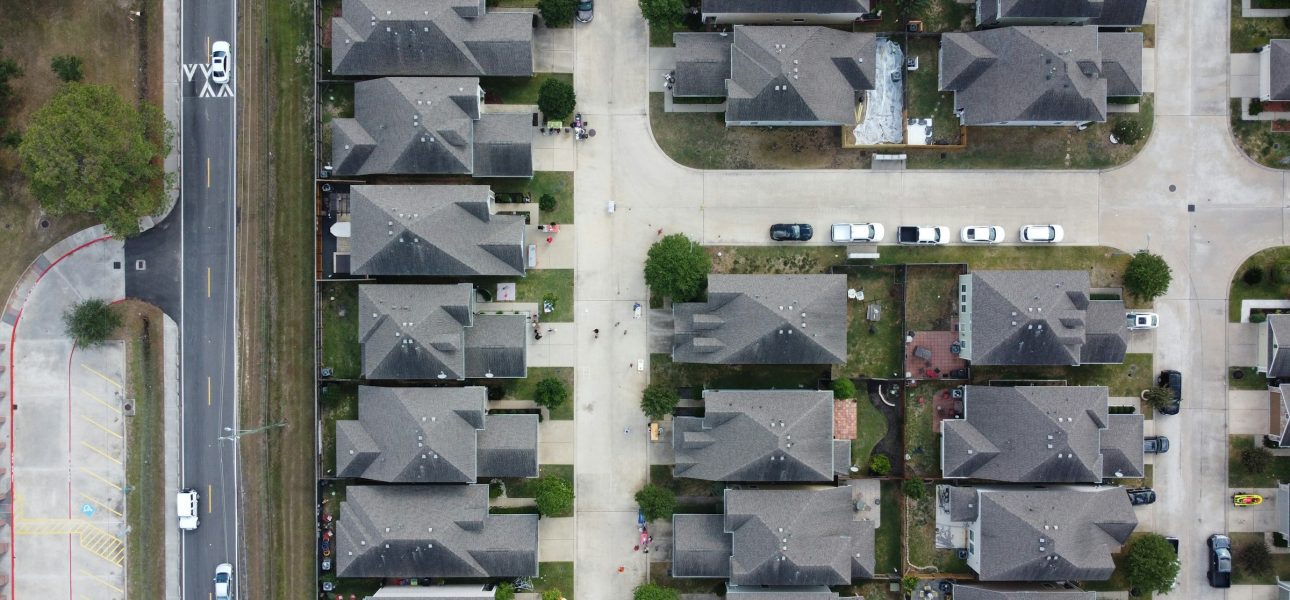
A DSCR loan Houston investors use is a business-purpose mortgage that gets approved mostly on the rent a property can bring in, not on your paycheck or tax returns. If the rent covers the mortgage, taxes, and insurance with some room to spare, the deal can work. Fix-and-flip loans, which people also call hard money loans in Houston, are the short-term cousin: they pay for the purchase and the rehab, and you exit by selling or by refinancing into a DSCR loan. Below is how both work in Houston right now, including why so many homeowners are suddenly landlords.
Quick take for busy investors:
- A DSCR loan Houston investors use qualifies the property’s rent, so they fit landlords, STR operators, and anyone whose tax returns do not tell the whole story.
- Fix-and-flip loans fit a deal that needs work before it can rent or sell.
- In Houston, property taxes, insurance, and flood risk move the numbers more than most people expect.
- If you are not sure which of the two fits your deal, you can book a call with Bancaverse™ before you sign anything.
What is a DSCR loan Houston investors use, and who is it for?
DSCR stands for debt service coverage ratio. It is a simple idea. Take the rent the property earns, compare it to what the property costs to carry, and see if the first number is big enough. Carrying costs here mean the mortgage payment, property taxes, and insurance, plus HOA dues if there are any.
That is why a DSCR loan Houston landlords choose looks different from the mortgage you got on your own home. Nobody is asking for two years of W-2s. Nobody is counting your day job against you. The question is about the building and the rent.
Who actually uses these? A few types of people come up again and again.
- The new investor buying a first rental who does not want to wait on a bank’s paperwork. If that is you, our guide to a DSCR loan for a first-time investor is a good place to start.
- The self-employed owner whose tax returns show lots of write-offs and not much income.
- The landlord with a growing pile of properties who is hitting the ceiling on conventional financing.
- The short-term rental operator who wants the underwriting to focus on the property and not on the calendar. More on that below.
- The accidental landlord, which is a very Houston story right now and gets its own section.
One thing to say plainly. These are business-purpose loans. They are for investment property, not for a home you plan to live in. Most of them close in an LLC or other entity, and that is normal.
Why are so many Houston homeowners becoming accidental landlords?
Because they listed the house, it did not sell, and renting it was the next best move. Zillow’s numbers show Houston at the top of the country for this. According to a report that ran in the Houston Chronicle and was syndicated by Yahoo Finance, owners who abandoned a sale in the prior three months make up 4.3% of Houston single-family rental listings. The national figure is 2.0%. The same report says that Houston share is about three times what it was three years ago.
Zillow economist Kara Ng is quoted saying the share probably understates things, since some owners skip the failed sale and go straight to renting. The same article reports that the average single-family rent in Houston is basically flat from a year ago, and that it can take up to two months to lease a home now, compared with under a month during the pandemic.
Think about what that means if you are one of those owners. You thought you would sell. You priced it, dropped the price, waited. The mortgage and the taxes did not wait with you. Now you are a landlord and nobody asked you.
If you are in that spot, you have three honest choices: keep the house and live in it, rent it and hold it, or sell. The middle one is where financing comes in, and it is where a lot of people get stuck. We wrote about how to think about the cash-out side of this in our piece on DSCR cash-out refinancing for Texas rental investors, which names Houston directly.
Can an accidental landlord get a DSCR loan Houston programs offer?
Often, yes, but the timing matters. A DSCR loan wants to see a rental that works as a rental. That usually means one of two things: a signed lease, or a market rent opinion from an appraiser. If the house has been vacant and listed for sale, you have to show it can pay its own way as a rental.
Here is the part people get wrong. If you took the property off the market and put a tenant in, there may be seasoning questions, meaning how long you have owned it or how long it has been rented. Every program treats that differently. So the smart move is to ask before you list it for rent, not after the tenant moves in.
And be honest with yourself about the math. A house you bought as a home, with a big mortgage and a small rent, may not pass the coverage test at all. That is not a failure. It just tells you the property is a sell, or a hold with some cash from you, and not a refinance.
How does a DSCR loan Houston underwriter review work on a rental?
Walk through it like the underwriter does. You are looking at four numbers.
- The rent. Either the lease or a market rent estimate.
- The principal and interest on the new loan.
- Property taxes. The real bill, not what the seller told you.
- Insurance, including flood coverage if the property needs it.
Add up the last three, call that the monthly cost to carry, and compare it to the rent. If the rent is bigger, you are above one. If it is smaller, you are below one, and the loan gets harder or needs more cash in. Each program draws its own line on how far below one it will go, so we are not going to quote one here.
Our DSCR loan calculator guide walks through the arithmetic with a worked example, and it is worth a few minutes before you make an offer on anything.
What else shows up on the checklist? Usually your credit history, cash reserves after closing, the entity you are buying through, and the condition of the property. Less experience tends to mean a more cautious structure. It does not usually mean a flat no.
What does the Houston market look like right now?
Softer than last year, with a lot of homes that have already had a price cut. According to Redfin’s Houston market page, which shows August 2026 data, the median sale price was about $349,800, down roughly 2.8% from a year earlier. About 36% of homes had a price drop. Homes sold were down about 3% from last year. Redfin’s data shows a buyer’s market with some room to negotiate, but it is not a collapse.
The other number to hold onto is who rents. The Census Bureau’s QuickFacts for Houston puts the owner-occupied rate at 42.1%, using 2020 to 2024 estimates. That means a bit more than half of Houston households rent. There is a deep tenant pool here, and that is a big part of why investors keep coming back to this market.
So what do you do with that? A few practical takeaways.
- Underwrite today’s rent. On any DSCR loan Houston deal, rents are flat, so do not build a deal on a raise you hope to push next year.
- Expect longer lease-up. If it can take up to two months to rent, carry that vacancy in your plan.
- Buy on what is true now. Prices are slightly down, so do not count on appreciation to cover a thin deal.
- Use the price cuts. When roughly a third of homes are dropping the price, a patient buyer has leverage.
How do Houston property taxes and flood insurance change the math?
More than almost anything else, and they are the two things new Houston investors underestimate. Texas has no state income tax, and the trade-off is property taxes that are a real cost on every rental. They go directly into the DSCR calculation, so a higher tax bill lowers your coverage. Pull the actual tax bill for the property, check how the appraisal has been moving, and do not rely on what the previous owner paid years ago.
Flood is the other one. Houston is flat, it rains hard, and everybody who has lived here for a few years has a story. Underwriters look at the flood zone, and many will ask about the flood history. If the property needs flood insurance, that cost goes into the monthly carry and drags the ratio down.
Practical steps before you make an offer:
- Look up the flood zone on the FEMA Flood Map Service Center.
- Get an insurance quote early, with flood included if the zone calls for it. Do it before you are under contract.
- Ask the seller whether the property has ever taken on water. Ask the neighbors too.
- Build the real tax bill and the real insurance quote into your DSCR math, then see if the deal still holds.
It is a boring checklist. It is also the one that separates a deal that closes from a deal that dies in week three.
Can a DSCR loan Houston short-term rental deal work?
Sometimes. A DSCR loan Houston short-term rental buyers apply for depends on the program and on the rules where the property sits. Some DSCR programs will underwrite a short-term rental using a market study or a history of bookings. Others want a long-term lease. We cover the basics in Can You Get a DSCR Loan for an Airbnb or Short-Term Rental?, so read that before you get attached to a deal.
One warning that applies everywhere. Check the local rules and any HOA or deed restrictions before you buy, not after. A property that cannot legally be rented short term does not work as a short-term rental no matter how good the photos are.
How do hard money loans in Houston work for a fix-and-flip?
Hard money loans in Houston are short-term loans on the property, often called rehab-to-rental or fix-and-flip loans, that cover the purchase and the construction budget. The rehab money is released in stages, called draws, after work is done. You pay it back when you sell or when you refinance into something longer term.
Here is the flow most flips follow:
- You find a deal and make an offer with a realistic after-repair value, based on recent closed sales and not on listings.
- You put together a scope of work and a budget, and ideally a contractor who has done this before.
- The loan funds the purchase. The rehab money comes out in draws as you finish phases.
- You sell, or you rent the property and refinance into a DSCR loan Houston investors can hold long term.
That last step is where the two products meet. Flip it, or keep it. A lot of Houston investors buy a distressed house with a short-term loan, fix it up, put a tenant in, and refinance into a DSCR loan. If you want to see the arithmetic on a flip, our fix-and-flip worksheet lays out a sample deal line by line.
Where does Houston flipping tend to happen? Older housing close in, inside the Loop and the Beltway, is a common target because the houses often need work and the land has value. Out in the suburbs, builders and investors are active on newer product and on build-to-rent communities. The Yahoo Finance report mentioned above counts 16,225 build-to-rent homes in the Houston area, up from under 3,000 less than a decade ago. That is a lot of new competition for any landlord, accidental or not, and it is worth knowing about when you set your rent.
Why does after-repair value matter so much in Houston?
Because it is the number everyone argues about. In a market where prices are drifting down and a lot of listings are cutting, an optimistic after-repair value can sink a flip. Use sold comparables from the last few months, in the same neighborhood, with similar square footage and finishes. If your plan only works at the top of the range, the plan needs another look.
Which parts of the Houston area can you finance in?
The Greater Houston area is wide. Investors we talk to buy across Harris County, Fort Bend County, Montgomery County, Brazoria County, and Galveston County, and each one has its own tax rates, flood patterns, and rental demand. Send us the property address and we can talk through how that county’s costs are likely to hit the numbers.
What mistakes do investors make with a DSCR loan Houston deals are especially prone to?
Most of them are about assumptions, not about the paperwork. Here are the ones we see most often.
- Using the old tax bill. Houston-area appraisals move, and the number you were shown may not be the number you will pay. A DSCR loan Houston investors close on gets underwritten with the real figure.
- Skipping the flood question. People assume a property is fine because it did not flood in the last storm they remember. Check the map and the history anyway.
- Counting on a rent bump. With rents flat across the area, a plan that needs a raise in month three is a plan with a hole in it.
- Forgetting vacancy. If a home can sit for up to two months before a tenant signs, your first year looks different from the spreadsheet you drew up.
- Treating a flip loan as a hold. A short-term loan has an end date. Know what you are refinancing into, and what the property has to show to get there.
- Waiting too long to ask. Questions are free before you are under contract. After that, they cost you time you may not have.
None of these are exotic. They are just the things that go wrong when someone is excited about a house and has not slowed down to run the numbers. A twenty-minute conversation before the offer is cheaper than a fight with an appraiser after it.
What should you have ready before you apply on a Houston deal?
A complete package gets you a faster answer. Here is what to gather.
- The property address, the purchase price, and the target closing date.
- For a rental: the lease, or rent comps that support what you plan to charge.
- For a flip: the scope of work, the budget, and your after-repair value with the comps behind it.
- The actual property tax bill and an insurance quote, with flood included if needed.
- Entity paperwork if you are buying through an LLC.
- A short list of past deals if you have them.
- Proof of funds for the down payment and for reserves after closing.
Missing pieces slow everything down. If you do not have something, say so up front and ask what can stand in for it.
How does Bancaverse™ fit in?
Bancaverse™ is a private credit platform and brokerage for business purpose mortgage lending. In plain terms, you bring us a deal, we organize it, and we help you work out which product fits it. We do not charge anything up front.
If you are not sure whether a DSCR loan Houston investors use or a short-term loan is the right product, that is a good reason to call. Do you need a short-term loan to buy and rehab? A DSCR loan to hold? Both, one after the other? Those questions are worth sorting out before you spend money on an appraisal.
DSCR loan Houston and investor financing FAQ
What is a DSCR loan Houston investors can use for a rental?
It is a business-purpose mortgage that qualifies mainly on the rent the property earns compared with its carrying costs. It does not rely on your personal income the way a home mortgage does, which is why self-employed owners and growing landlords use it so often.
Can I get a DSCR loan Houston programs allow on a house I could not sell?
Often you can, as long as the property works as a rental. Underwriting will usually ask for a lease or a market rent opinion, and some programs ask how long you have owned the house or how long it has been rented. Ask about that before you put a tenant in.
Do Houston flood zones affect investor loans?
Yes. Underwriters check the flood zone and often the flood history. If the property needs flood insurance, that cost lowers your coverage ratio. Get a quote before you go under contract, and check the FEMA maps.
Why do Texas property taxes matter so much for DSCR?
Property taxes are part of the monthly cost the rent has to cover. A high bill cuts into the coverage ratio, so use the actual tax bill and not an old figure from the seller.
What are hard money loans in Houston used for?
Mostly for short-term purchases that need work, like fix-and-flips and rehab-to-rent deals. They fund the purchase and release rehab money in draws, and you repay by selling or by refinancing into a longer-term loan like a DSCR loan.
Is there an application fee at Bancaverse™?
No. We do not charge anything up front, and there is no cost to talk a deal through.
Do I need to be an experienced investor?
No, though experience can change how a deal is structured. First-time investors do get financed, and a clear plan, a solid contractor, and realistic numbers help a lot.
Ready to run your Houston deal?
If you want a DSCR loan Houston investors rely on for a rental, a flip to fund, or a house you never meant to rent, the first step is a conversation. Book a call with Bancaverse™ and talk it through, or start your application if you already have an address and numbers ready.
Bancaverse™ is a private credit platform and brokerage for business purpose mortgage lending. This article is general information, not legal, tax, or financial advice. Market figures are from the sources linked above and may change.