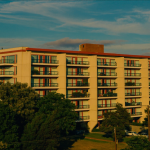
Bridge-to-agency for multifamily is the strategy of 2026. Multifamily debt stayed liquid heading into 2026 — the GSEs even received a roughly 20.5% increase to their lending caps. The catch: agency and bank takeouts demand a stabilized asset. For sponsors mid lease-up, repositioning, or fresh off an acquisition, a bridge-to-agency structure is often the cleanest path to that long-term debt.
Bancaverse is a broker, not a lender. General information on business-purpose, non-owner-occupied investment financing only — not consumer mortgage or legal advice.
What “bridge-to-agency” means
A short-term bridge loan funds the gap between today’s in-transition asset and tomorrow’s stabilized one. You borrow for 12–36 months, execute the business plan — lease-up, renovations, rent repositioning — then refinance into agency (Fannie/Freddie) or bank permanent debt once the property hits the required occupancy and debt-service metrics.
When it fits
- Value-add multifamily mid-renovation or repositioning
- Recently acquired assets that need seasoning before agency eligibility
- Lease-up properties not yet at stabilized occupancy
- A maturing loan a bank won’t renew (see the 2026 CRE maturity wall)
How the takeout works
Underwriters size the agency takeout on stabilized numbers — typically a target DSCR and occupancy. Your bridge term should give realistic runway to reach those metrics with a buffer. Private credit increasingly fills this transitional slot as banks retreat; debt funds and mortgage REITs captured 37% of non-agency closings in 2025. (Background: the state of private credit in 2026.)
What multifamily bridge lenders want
Sponsor experience comes first — a track record of executing similar business plans — followed by liquidity and net worth. Lenders also want a credible, specific exit: what stabilized looks like, when, and which takeout you are targeting.
Frequently asked questions
How long is a typical multifamily bridge loan?
Most run 12 to 36 months, sized to give the asset time to stabilize before an agency or bank takeout.
Can I refinance a bridge loan into an agency loan?
Yes — that is the entire premise of bridge-to-agency. Once occupancy and DSCR targets are met, you refinance into longer-term Fannie/Freddie or bank debt.
Is this for owner-occupied property?
No. This is business-purpose, non-owner-occupied investment financing only.
Costs and timing: what to expect
A bridge loan costs more than agency debt. That is the trade-off for speed and flexibility. However, the math often works in your favor.
Here is why. A short period of higher-cost bridge debt can unlock a much larger, cheaper agency loan once the asset stabilizes. As a result, the blended cost over the hold can be very reasonable.
- Term: typically 12 to 36 months.
- Structure: often interest-only, which protects cash flow during lease-up.
- Exit: a planned refinance into agency or bank debt.
Common mistakes to avoid
Bridge-to-agency works well when it is planned. It goes wrong when it is rushed. Watch for these traps.
- Too short a term. Give yourself a realistic runway plus a buffer.
- No clear exit. Know your target takeout before you borrow.
- Thin reserves. Renovations and lease-up often take longer than expected.
- One quote only. Always compare lenders on the same deal.
The bottom line
Multifamily debt remains liquid in 2026, and agency capital is available for stabilized assets. Bridge-to-agency is simply the path that connects today’s transitional property to tomorrow’s long-term loan. Plan the exit, size the term with a buffer, and compare lenders. Do that, and the structure becomes a reliable tool rather than a gamble.
Plan your bridge-to-agency with Bancaverse
The right bridge is the one with a clear path to takeout. Bancaverse presents your multifamily deal to private and institutional lenders, then returns competing offers. As a result, you can line up the bridge and map the agency exit at the same time. Reach out to structure your next multifamily deal with the whole market behind you.
How the stabilization math works
Agency lenders size their loans on stabilized numbers. In practice, that means two metrics matter most: occupancy and debt-service coverage.
Consider a simple example. A sponsor buys a 60-unit property at 78% occupancy with below-market rents. An agency loan today would be small, because the income is low.
So the sponsor takes a bridge loan instead. Over 18 months, they renovate units, lift occupancy to 94%, and bring rents to market. Now the income supports a far larger agency loan. As a result, the refinance pays off the bridge and often returns equity.
When bridge-to-agency for multifamily makes sense
This structure is not for every deal. Still, it fits a wide range of common situations.
- Value-add multifamily mid-renovation or repositioning.
- Recent acquisitions that need seasoning before agency eligibility.
- Lease-up properties not yet at stabilized occupancy.
- Maturing loans a bank will not renew on acceptable terms.
If your deal looks like one of these, bridge-to-agency deserves a serious look.
Bridge-to-agency vs. waiting it out
Some sponsors try to wait for better conditions instead. Occasionally that works. More often, waiting carries hidden costs.
For instance, a maturing loan does not wait. Neither does a renovation budget or a market window. Therefore, a planned bridge usually beats hoping conditions improve on their own.
The goal is control. A bridge gives you a defined runway and a clear exit, rather than an open-ended gamble on timing.
What strong sponsors bring to the table
Lenders back people as much as properties. Consequently, the strongest applications share a few traits.
- A track record of executing similar business plans.
- Adequate liquidity and net worth to weather surprises.
- A specific, credible plan to reach stabilized metrics.
- A named takeout target, not a vague hope to refinance.
Why 2026 favors this strategy
Two trends make bridge-to-agency especially timely this year. First, multifamily debt has stayed liquid even as other sectors tightened.
Second, the government-sponsored enterprises received roughly a 20.5% increase to their lending caps for 2026. In other words, there is more agency capital available for the takeout. That makes the exit more reliable for sponsors who stabilize their assets.
Meanwhile, private bridge lenders remain eager to fund the transitional stage. As a result, both ends of the strategy are well supported right now.
A typical 24-month path
Every deal differs, but a common timeline looks like this.
- Months 0–3: close the bridge loan and begin renovations.
- Months 3–15: complete unit turns, lease up, and push rents to market.
- Months 15–21: hit stabilized occupancy and debt-service coverage.
- Months 21–24: refinance into the agency or bank takeout.
Build in a buffer at each stage. Renovations and lease-up almost always take longer than the spreadsheet suggests.
Key takeaways
- Bridge-to-agency connects a transitional multifamily asset to long-term debt.
- The bridge funds stabilization; the agency loan rewards the result.
- 2026 conditions are favorable, with higher GSE caps and liquid bridge capital.
- Plan the exit first, size the term with a buffer, and compare lenders.
In the end, the structure is simple and proven. With a clear plan and competing offers, you can stabilize today and refinance into strength tomorrow.
If you are weighing a bridge for a value-add or lease-up property, start the conversation early. The sooner you map the path, the more lenders will compete for your business, and the better your final terms will be. A short planning step now can save months of stress later.